
TPO and EPDM Roof Repair Specialists
By Allweather Roof Editorial Team · Updated 2026-08-21
TPO offers heat-welded seams and superior UV resistance, while EPDM provides proven durability at lower cost. Allweather Roof, serving Golden Valley, MN since 1925, recommends TPO for reflective, energy-efficient commercial roofs. Call (612) 721-2545 for a free commercial roof assessment to determine your building’s best fit.
Commercial roofing decisions between TPO and EPDM require expert evaluation, and Allweather Roof delivers 24/7 emergency repairs alongside free commercial
TPO and EPDM differ mainly in composition and performance under cold, variable climates. TPO’s white, reflective surface deflects UV rays and provides passive cooling. EPDM’s black rubber membrane offers proven flexibility during freeze-thaw cycles. Allweather Roof’s certified technicians repair both systems using manufacturer-approved methods that preserve warranties and extend roof lifespan for Minnesota commercial buildings.
Key Takeaways
- TPO and EPDM are single-ply membrane roofing systems designed for cost-effective, lightweight commercial applications.
- EPDM and TPO differ fundamentally in composition and long-term performance characteristics for commercial roofs.
- Both materials support roof coatings and accommodate professional installations by experienced commercial roofing contractors.
- Allweather Roof provides expert TPO and EPDM repair services; call (612) 721-2545 for assessments.
What Really Separates TPO From EPDM Roofing?
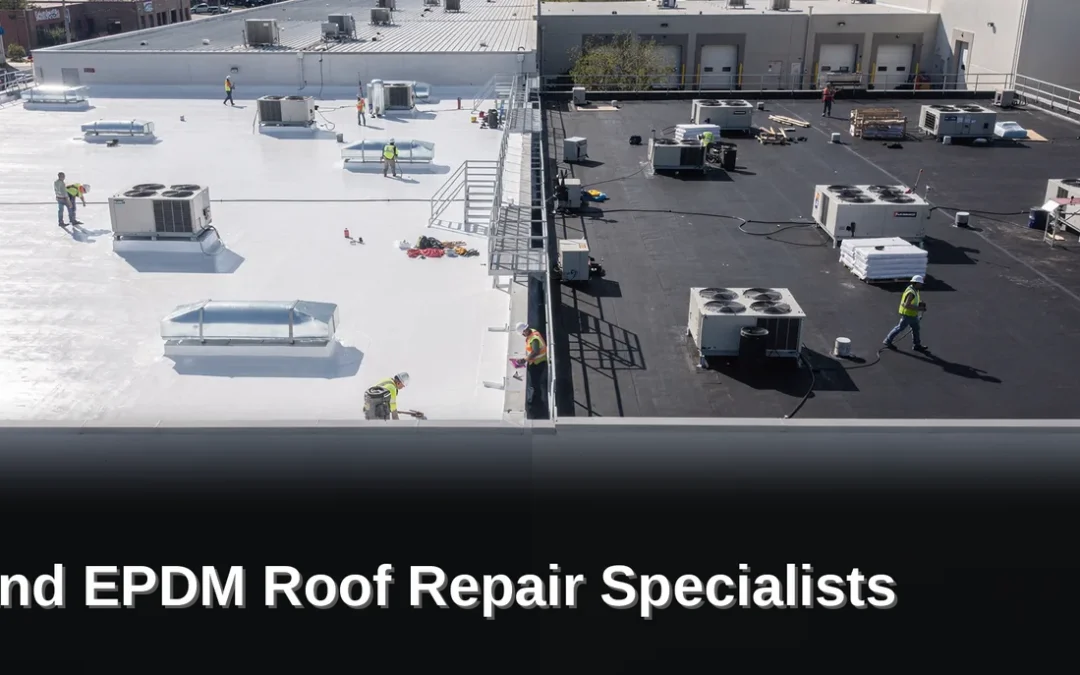
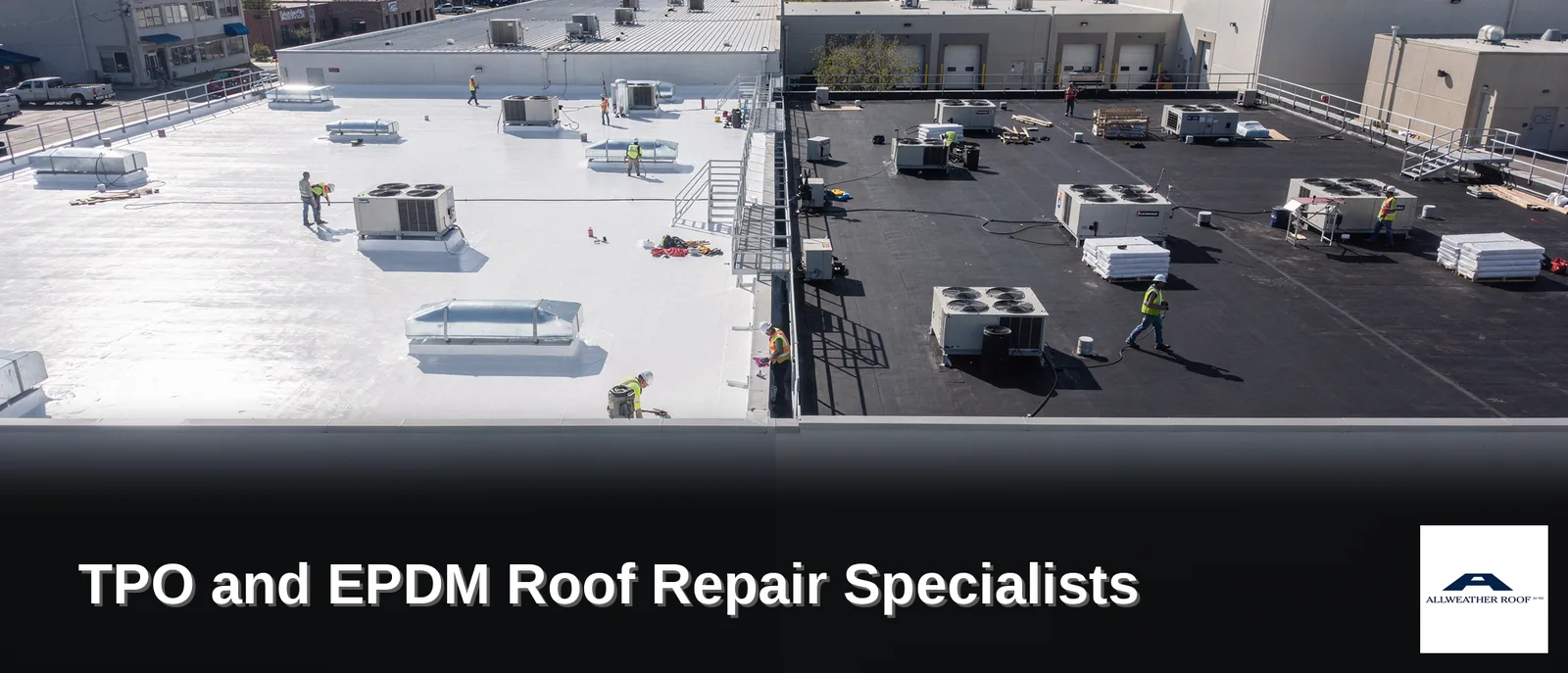
Membrane color drives the core performance gap between these two systems. TPO (Thermoplastic Polyolefin) wears a white, reflective surface that bounces UV rays away from the building, delivering passive cooling and cutting summer air conditioning demand. EPDM (Ethylene Propylene Diene Monomer) takes the opposite approach: its dark surface absorbs solar heat, which helps trim heating costs once winter sets in. For Minnesota properties facing wide seasonal swings, that thermal behavior often matters more than price alone.
Both materials share a common foundation, though. Each is a single-ply membrane system, meaning a single layer handles the entire waterproofing job. That design keeps installation lightweight, cost-efficient, and comparatively fast compared to multi-layer alternatives.
Is TPO or EPDM better for cold climates?
Neither material wins outright in every scenario. TPO’s reflective properties favor buildings with high cooling loads, while EPDM’s heat-absorbing surface benefits structures fighting long, harsh winters.
Does the roofing contractor’s certification matter?
Certification determines installation quality regardless of which membrane gets chosen. TPO and EPDM Roof Repair Specialists trained across every major roofing system evaluate building orientation, insulation, and climate exposure before recommending a direction — protecting warranty coverage and long-term performance in the process.
How Does Minnesota’s Climate Shape Your Repair Choice?
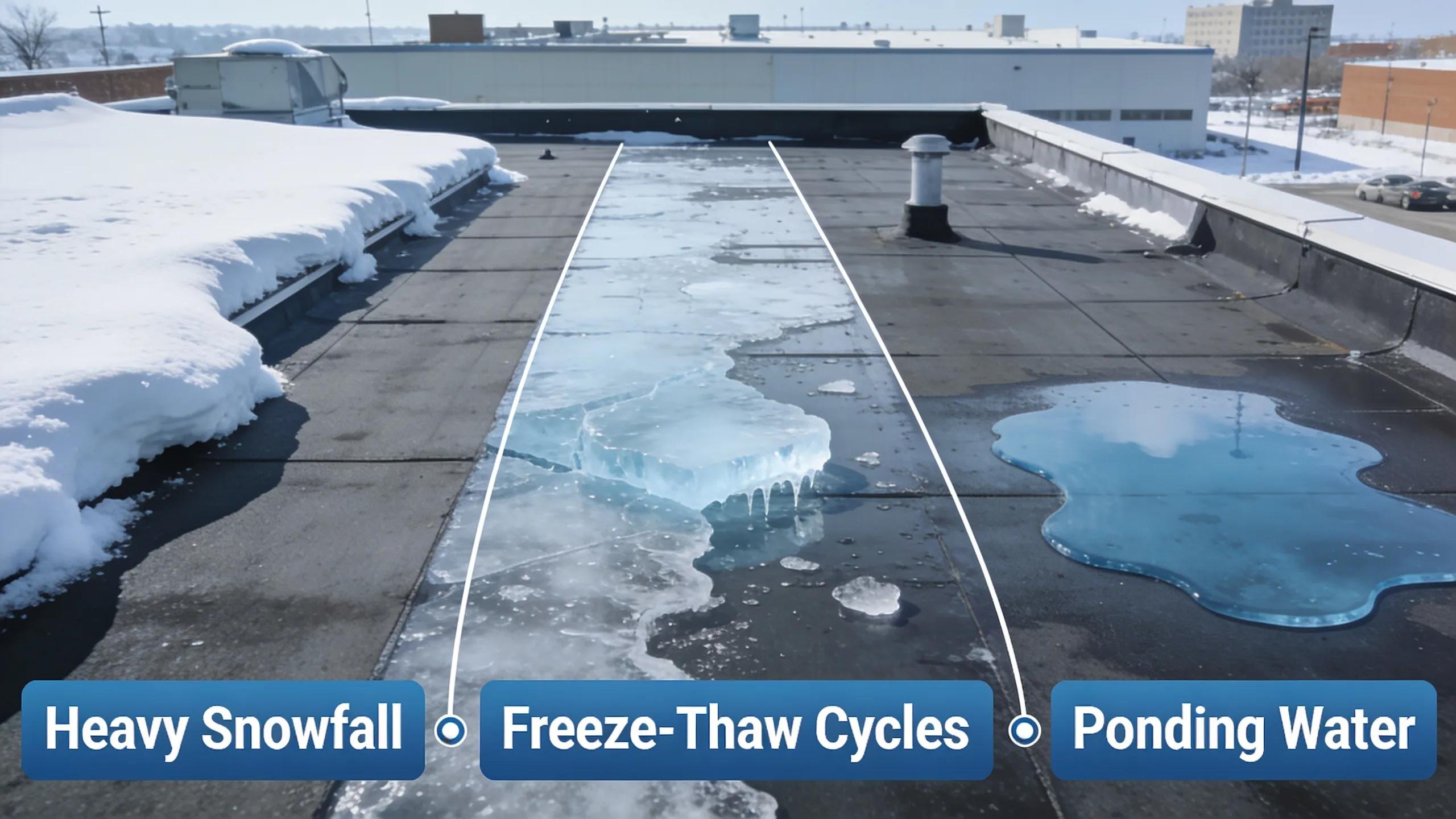
Minnesota building owners face three punishing stressors every year: heavy snowfall, repeated freeze-thaw cycles, and ponding water once spring melt arrives. Each condition attacks a apartment roof membrane differently. Snow load stresses seams and flashings, freeze-thaw movement opens small cracks into larger splits, and standing water accelerates membrane fatigue long before a roof reaches its expected service life.
Material choice determines how well a roof survives these cycles. EPDM (ethylene propylene diene monomer) brings high tensile strength. Strong elongation capacity to the table, letting the membrane stretch and rebound as temperatures swing from subzero mornings to warm afternoons. That flexibility matters most during Minnesota’s shoulder seasons, when a single day can cross 40 degrees.
Why does membrane flexibility matter so much in Minnesota?
Rigid materials crack under repeated contraction and expansion; flexible ones absorb that movement instead. A membrane that can’t elongate develops stress fractures at seams and penetrations within a handful of freeze-thaw cycles.
Facility managers evaluating repair partners should look for:
- Certified technician experience spanning 15 to over 30 years
- Manufacturer-approved repair methods that preserve existing warranties
- A track record built on regional climate conditions, not generic assumptions
Allweather Roof brings that regional depth to every project, backed by a legacy dating to 1925 and installations exceeding ten thousand roofs across more than one hundred million square feet.
Who Should Handle Your TPO or EPDM Repair?
Certified commercial roofing specialists, not general contractors, should handle any TPO or EPDM membrane repair. Building owners who hire uncertified crews risk voided warranties and repeat leaks that cost far more than the original job. Allweather Roof’s TPO and EPDM Roof Repair Specialists bring technicians who are on call day and night, ready to diagnose leaks, complete repairs, and keep manufacturer warranties intact.
Beyond emergency response, the right partner offers a full service menu. Allweather Roof provides commercial roof maintenance, 24/7 emergency repairs, re-roofing, annual maintenance, and free commercial roof assessments. That range matters for facility managers juggling multiple properties across variable Minnesota winters.
What credentials should a roofing contractor have?
Look for recognized industry awards and long-standing certifications. Allweather Roof has earned the Master Contractor Award for 38 consecutive years, a mark of sustained quality and service standards.
How does technology improve repair accuracy?
Modern assessment tools remove guesswork from membrane diagnostics. Allweather Roof deploys advanced drones and thermal imaging technology to evaluate roofing conditions quickly. Accurately before recommending any repair scope.
Selecting a reputable, certified contractor also ensures compliance with local building regulations. That compliance translates into a smoother repair process. Fewer surprises for property administrators managing tight budgets and tenant expectations.
FAQ
Which roofing membrane suits buildings with high cooling loads?
TPO features a white, reflective surface that deflects UV rays and provides passive cooling, reducing summer air conditioning demand for commercial buildings with significant cooling needs.
Why do TPO and EPDM work well for cost-effective commercial installations?
Both are single-ply membrane systems, meaning one layer handles waterproofing, which keeps installation lightweight, cost-efficient, and comparatively fast compared to multi-layer roofing alternatives.
Who handles TPO and EPDM roof repairs for Minnesota commercial buildings?
Allweather Roof’s certified technicians repair both systems using manufacturer-approved methods that preserve warranties; call the Golden Valley, MN headquarters at (612) 721-2545 for assessments.
Conclusion
In closing, both TPO and EPDM roofing systems deliver proven durability and performance when properly installed and maintained. The choice between them depends on your building’s specific climate, budget, and operational needs. Allweather Roof’s certified technicians assess your roof’s unique requirements and recommend the system that maximizes longevity and protects your investment. With a century of commercial roofing expertise, we ensure your choice delivers years of reliable protection and peace of mind.