Ponding Water on a Commercial Roof: Causes and Solutions
After a heavy rain, it is normal to see some water on a commercial roof.
But if water remains on the roof long after the rain has stopped, that may be a sign that something needs to be evaluated.
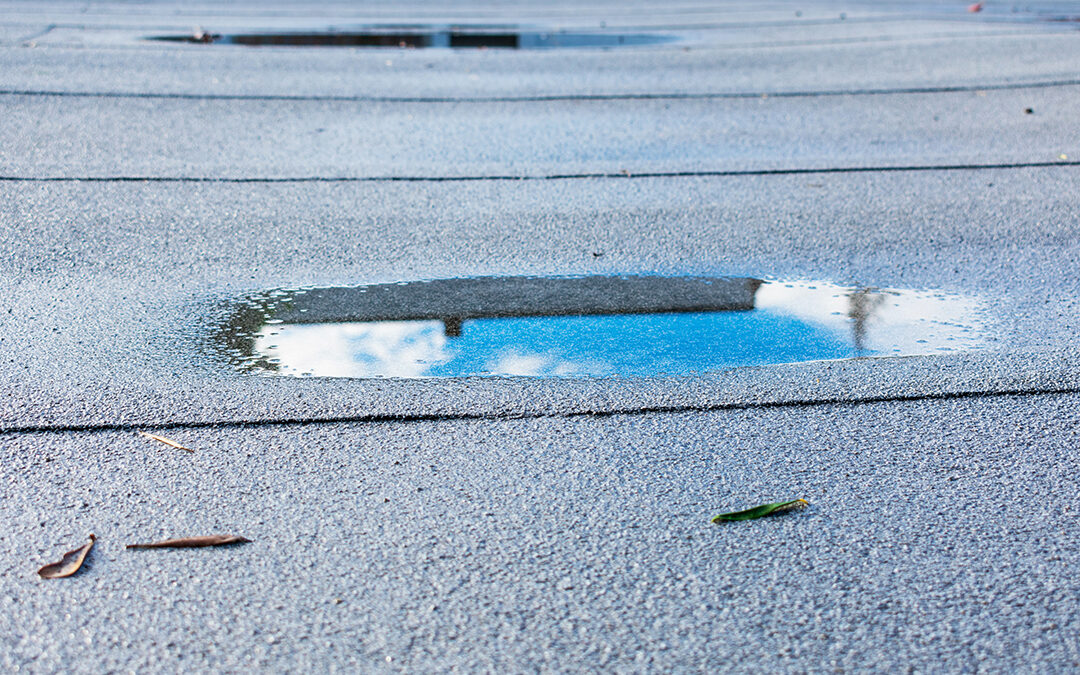
This is known as ponding water.
Ponding water is especially important for commercial property owners because many commercial buildings use low-slope roofing systems where proper drainage is essential.
Minnesota’s weather makes drainage even more important. Commercial roofs may have to manage heavy rain, melting snow, ice, and repeated freeze-thaw cycles throughout the year.
So why does water pond on a commercial roof, and what should you do about it?
What Is Ponding Water?
Ponding water is water that remains on the roof after precipitation has ended instead of draining away within a reasonable period.
A small amount of temporary water following heavy rain is not necessarily a roofing failure.
The concern is persistent or recurring standing water.
If the same areas of the roof repeatedly hold water, it is worth having the drainage and roofing system inspected.
What Causes Ponding Water on Commercial Roofs?
There can be several causes.
1. Blocked Roof Drains
Debris can interfere with roof drains and prevent water from leaving the roof efficiently.
Leaves, dirt, branches, sediment, and other debris can accumulate around drainage areas.
Regular inspection and maintenance of drains and other drainage components can help identify these problems.
2. Clogged Scuppers and Gutters
Scuppers and gutters are also important components of a commercial roof drainage system.
If they become blocked or damaged, water may not move away from the roof as intended.
3. Insufficient Drainage
A roof needs an appropriate way to move water toward drains, scuppers, gutters, or other drainage points.
If the roof does not drain properly, water can collect in low areas.
Minnesota’s building rules include requirements related to roof drainage, which is one reason drainage should be considered during commercial roofing projects.
4. Roof Slope
Commercial flat roofs are not necessarily completely flat.
Low-slope commercial roofing systems are designed with drainage in mind.
Over time, however, changes in the roof assembly or structural conditions can contribute to low areas where water collects.
5. Deteriorated Roofing Materials
Aging roofing materials can develop problems that affect the roof’s ability to perform properly.
Damage to the membrane, flashing, seams, or other components can also contribute to water intrusion.
6. Changes Around Rooftop Equipment
Commercial buildings often have HVAC units, vents, pipes, curbs, and other rooftop equipment.
When equipment is added, removed, or modified, the surrounding roofing system needs to be properly detailed.
Poorly executed modifications can create areas where water collects or enters the building.
Why Is Ponding Water a Problem?
The biggest concern is not simply that water is sitting on the roof.
The concern is what repeated ponding can do to the roofing system and what it may indicate about the building.
Persistent ponding can contribute to roofing deterioration and may increase the risk of leaks.
Water can also enter through weaknesses in seams, flashing, penetrations, or damaged membrane.
Once moisture gets beneath the roofing system, it can potentially affect insulation and decking.
That is why recurring ponding should not simply be ignored.
Does Ponding Water Mean You Need a New Roof?
Not necessarily.
This is an important distinction.
Seeing standing water does not automatically mean your commercial roof needs to be replaced.
The cause needs to be identified first.
Depending on the condition of the roof, the solution could involve:
- Clearing or repairing drains
- Cleaning gutters or scuppers
- Repairing localized roofing damage
- Addressing flashing problems
- Improving drainage
- Repairing membrane damage
- Correcting other roof-system issues
- Replacing the roofing system when deterioration is widespread
A professional commercial roof inspection can help determine what is actually happening.
How Minnesota Weather Can Affect Commercial Roof Drainage
Minnesota commercial buildings have to deal with changing weather throughout the year.
Rain can put an immediate demand on the roof drainage system.
Then temperatures can drop, creating ice.
Snow accumulation and melting can create additional water.
Freeze-thaw cycles can repeatedly expose weaknesses in roofing components.
This makes drainage and roof maintenance particularly important for Minnesota commercial properties.
What Should Property Owners Do About Ponding Water?
If you regularly see standing water on your commercial roof, start by having the roof professionally evaluated.
A roofing professional can inspect:
- Roof drains
- Scuppers
- Gutters
- Roof slope
- Membrane condition
- Seams
- Flashing
- Penetrations
- Rooftop equipment
- Previous repairs
- Areas of recurring ponding
- Signs of moisture intrusion
The goal is to identify the cause rather than simply treat the visible symptom.
Preventing Commercial Roof Drainage Problems
Preventive maintenance is one of the best ways to stay ahead of commercial roofing problems.
A maintenance program can include regular inspections and attention to drainage systems before problems become emergencies.
Allweather Roof recommends regular commercial roof inspections and maintenance, particularly for identifying conditions such as ponding water, damaged roofing materials, drainage issues, and other potential problems before they become more serious.
Protect Your Commercial Building From Roof Problems
Your commercial roof does more than keep rain out.
It protects your building, equipment, inventory, employees, tenants, and daily operations.
If you are seeing recurring ponding water, clogged drains, leaks, damaged roofing materials, or other concerns, having the roof evaluated can help you understand the problem before it becomes an emergency.
Allweather Roof provides commercial roofing inspections, repairs, maintenance, and replacement services throughout Minnesota.
If you are concerned about drainage or standing water on your commercial roof, contact Allweather Roof to schedule a professional evaluation.