
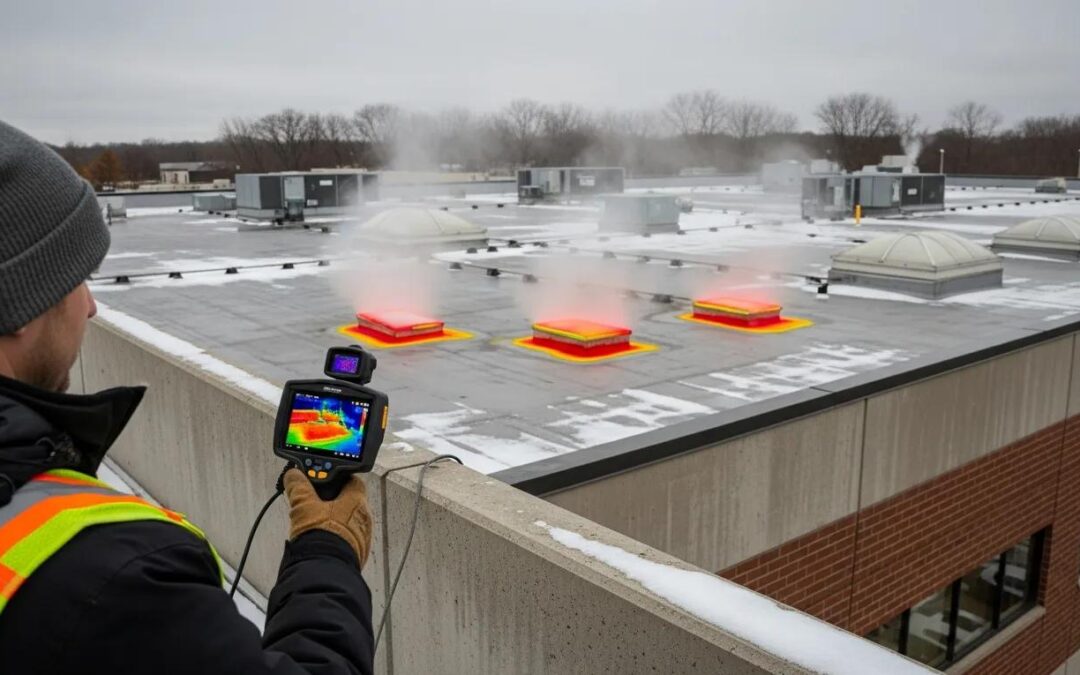
Thermal Imaging Roof Inspection Services for Minnesota Commercial Properties: Advanced Diagnostics to Detect Leaks and Extend Roof Lifespan

Thermal imaging roof inspections have emerged as a vital tool for maintaining the integrity of commercial properties in Minnesota. This advanced diagnostic method utilizes infrared technology to detect temperature variations, allowing for the identification of hidden leaks and moisture issues that could compromise a building’s structure. In this article, we will explore the mechanisms behind thermal imaging, its benefits for commercial roof diagnostics, and how it can extend the lifespan of roofing systems. By understanding these advanced techniques, property owners can make informed decisions about maintenance and repairs, ultimately saving time and money. We will cover key topics such as the benefits of thermal imaging, the role of drone technology in inspections, and strategies for effective roof maintenance.

Advanced Diagnostics for Leak Detection

Thermal imaging technology provides advanced diagnostics for leak detection by identifying temperature differentials on roof surfaces. This method allows inspectors to locate subsurface moisture that may not be visible through traditional inspection methods. By combining visual assessments with thermal imaging, professionals can conduct comprehensive inspections that reveal potential issues before they escalate into costly repairs. The ability to detect leaks early is crucial for maintaining the structural integrity of commercial roofs, ensuring that property owners can address problems proactively.

The effectiveness of thermography in identifying elusive roof leaks, particularly across vast industrial surfaces, is well-documented.

Thermography for Industrial Roof Leak Detection

The horizontal roofs of industrial buildings are the weakest part of a structure. Imperfect design of horizontal roofs causes roof leakage. For roofs with a large surface area, locating leakage points is very difficult. The pro

Roof leak detection by thermography of as-built BIM, 2022

Strategies to Extend Roof Lifespan

Implementing effective strategies for roof maintenance can significantly extend the lifespan of commercial roofing systems. Here are some key strategies:

  1. Proactive Maintenance: Regular inspections and maintenance can identify potential issues before they become major problems, allowing for timely repairs.
  2. Targeted Repairs: Utilizing thermal imaging data enables property owners to make informed decisions about where to focus repairs, ensuring that resources are allocated efficiently.
  3. Quality Materials: Investing in high-quality roofing materials can enhance durability and resistance to environmental factors, ultimately prolonging the roof's lifespan.

Incorporating thermal imaging into these strategies can provide additional insights, helping property owners make data-driven decisions about their roofing systems. Allweather Roof, a Minnesota-based commercial roofing service provider, specializes in advanced diagnostics, including thermal imaging roof inspections, to support these maintenance strategies.

Conclusion

Thermal imaging plays a crucial role in the maintenance of commercial roofs by providing sophisticated diagnostics that help identify issues early. Regular inspections using this technology can minimize repair costs and protect valuable assets. By integrating thermal imaging into a comprehensive maintenance plan, property owners can ensure the longevity of their roofing systems and avoid unexpected failures.

What Are the Benefits of Thermal Imaging in Commercial Roof Diagnostics?

Thermal imaging offers several benefits for commercial roof diagnostics, making it an invaluable tool for property owners. The primary advantages include:

  • Cost Savings: Early leak detection through thermal imaging can prevent extensive damage and reduce long-term repair expenses.
  • Efficiency Improvements: This technology enhances the efficiency of diagnosing issues, allowing for quicker and more accurate assessments.
  • Enhanced Detection Capabilities: Thermal imaging can identify subsurface problems that may not be visible through traditional inspection methods, providing a more comprehensive understanding of a roof's condition.

These benefits highlight the importance of incorporating thermal imaging into regular maintenance practices for commercial properties.

How Does Infrared Roof Inspection Detect Moisture and Leaks?

Infrared roof inspection detects moisture and leaks by measuring temperature differentials across the roof surface. When moisture infiltrates a roofing system, it alters the thermal properties of the materials, leading to temperature variations that can be captured by thermal imaging cameras. This technology allows inspectors to visualize areas of concern, providing a clear indication of where moisture is present. Additionally, drone mapping can enhance the inspection process by providing visual context and access to hard-to-reach areas, further improving diagnostic accuracy.

Why Is Thermal Imaging Essential for Preventive Roof Maintenance?

Thermal imaging is essential for preventive roof maintenance as it enables early detection of issues that could lead to significant repairs if left unaddressed. By identifying problems such as leaks and insulation deficiencies early, property owners can implement targeted repairs that save time and resources. Furthermore, the use of thermal imaging contributes to energy efficiency improvements, as it helps identify areas where heat loss may be occurring, allowing for corrective measures to be taken.

How Does Drone Technology Enhance Commercial Roof Inspections in Minnesota?
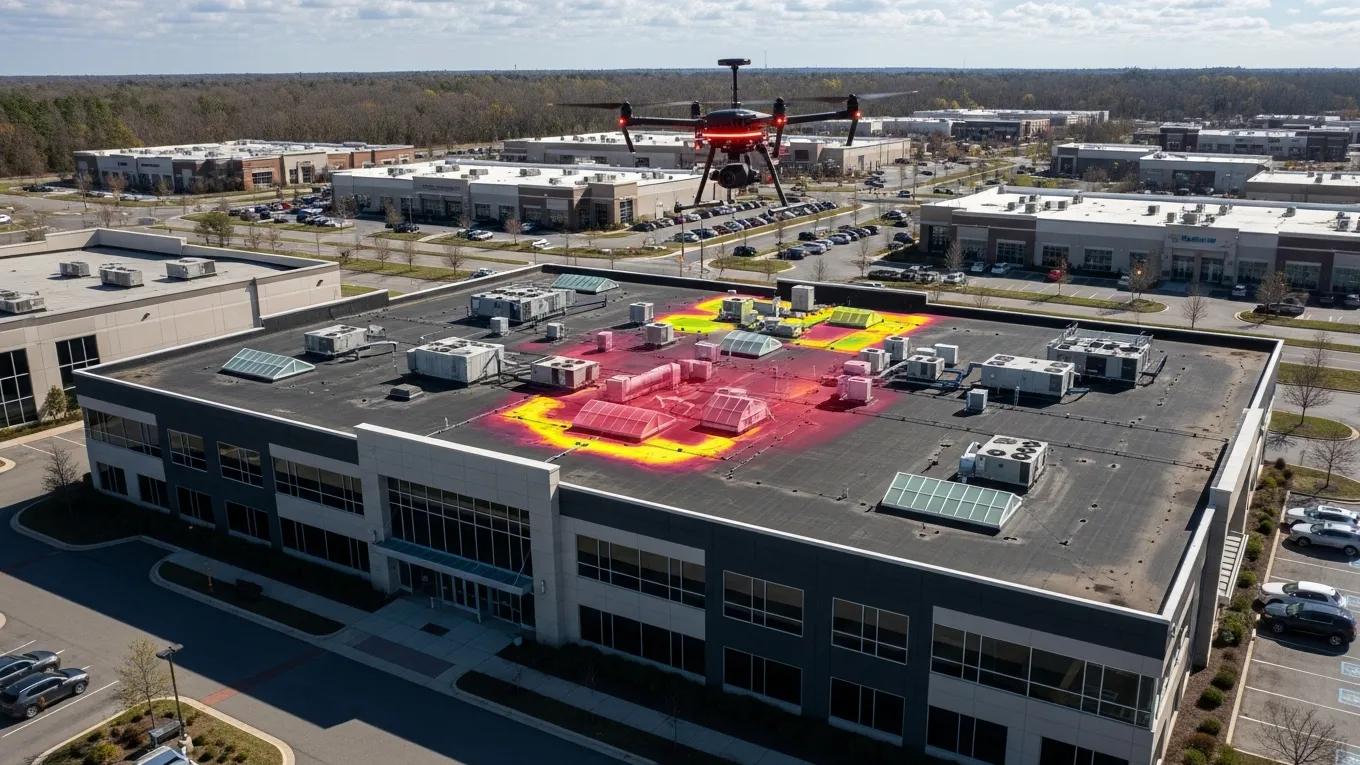
Drone technology enhances commercial roof inspections by providing high-resolution imagery and access to difficult-to-reach areas. Drones can quickly survey large roof spaces, capturing detailed images that can be analyzed for potential issues. This technology not only improves safety by reducing the need for personnel to access hazardous areas but also increases the efficiency of the inspection process. By integrating drone technology with thermal imaging, inspectors can obtain a comprehensive view of a roof’s condition, leading to more accurate diagnostics.

This advanced integration of drone technology with thermal imaging is crucial for conducting thorough energy audits and identifying building envelope deficiencies that are otherwise invisible.

Drone-Based Thermal Leak Detection for Building Envelopes

The primary goal of drone-based energy audits is to visually identify thermal leaks and other building envelope deficiencies that are not visible to the naked eye. This allows for early detection of problems, which can save building owners money on repairs and energy costs.

Heat mapping drones: an autonomous computer-vision-based procedure for building envelope inspection using unmanned aerial systems (UAS), T Rakha, 2009

What Are the Advantages of Drone Roof Surveys for Accurate Diagnostics?

Drone roof surveys offer several advantages for accurate diagnostics, including:

  1. High-Resolution Imagery: Drones capture detailed images that allow for thorough assessments of roof conditions.
  2. Enhanced Safety: By minimizing the need for physical access to roofs, drones reduce the risk of accidents during inspections.
  3. Thermal Imaging Integration: Combining drone technology with thermal imaging enhances the accuracy of diagnostics, providing a complete picture of a roof's health.

These advantages make drone surveys an essential component of modern roof inspection practices.

How Do Drones Integrate with Thermal Imaging for Comprehensive Roof Assessments?

Drones integrate with thermal imaging to create a robust dataset that enhances the overall assessment of a roof’s condition. By capturing both visual and thermal data, inspectors can identify issues more effectively and prioritize repairs based on the severity of the findings. This integration not only improves diagnostic accuracy but also streamlines the inspection process, allowing for quicker turnaround times and more efficient resource allocation.

Further demonstrating the power of this combined approach, advanced methods leverage drones with deep learning to precisely detect flat roof leaks, offering significant advantages over traditional inspection techniques.

Drone Thermal Imaging for Flat Roof Leak Detection

This paper presents an efficient and accurate method for detecting flat roof leaks using a combination of unmanned aerial vehicles (UAVs) and deep learning. The proposed method utilizes a DJI M300 drone equipped with RGB and thermal cameras to capture high-resolution images of the roof. These images are then processed to create orthomosaics and digital elevation models (DEMs). A deep learning model based on the U-NET architecture is then used to segment the roof into different classes, such as PVC foil, windows, and sidewalks. Finally, the damaged insulation is identified by analyzing the temperature distribution within the PVC foil segments. The proposed method has several advantages over traditional inspection methods. It is much faster and more efficient. A UAV can collect images of a large roof in a matter of minutes, while traditional methods can take several days or weeks. The orthomosaics and temperature maps generated by the UAV are much more detailed than the im

Flat roof classification and leaks detections by Deep Learning, 2023

Which Common Roof Issues Can Thermal Imaging Identify in Commercial Properties?

Thermal imaging can identify several common roof issues in commercial properties, including:

  • Types of Leaks: The technology can detect various types of leaks, including those caused by membrane failures or flashing issues.
  • Insulation Problems: Thermal imaging helps identify insulation deficiencies that can lead to energy loss and increased utility costs.
  • Structural Defects: The technology can reveal structural issues, such as thermal bridging, that may compromise the integrity of the roof.

By addressing these common issues early, property owners can prevent more significant problems down the line.

How Does Thermal Imaging Detect Insulation Deficiencies and Energy Loss?
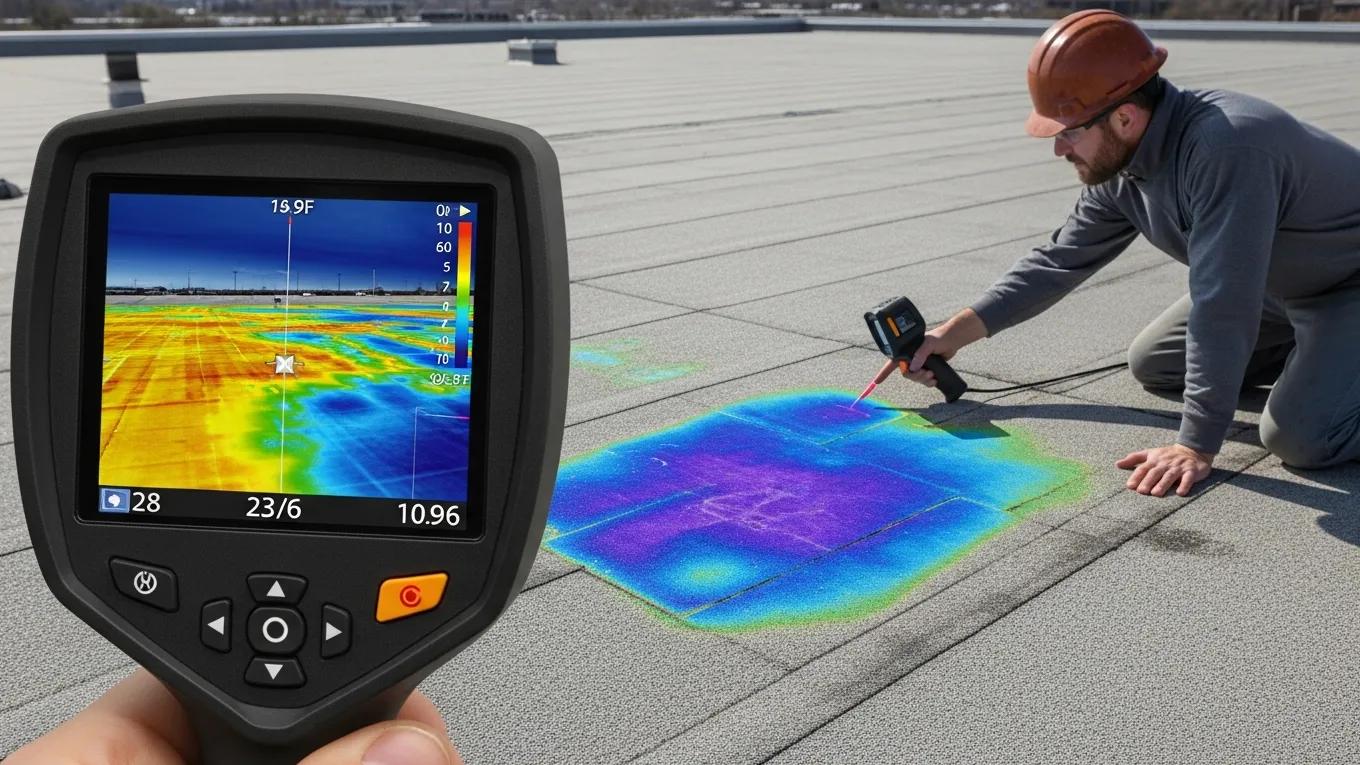
Thermal imaging detects insulation deficiencies and energy loss by identifying temperature differentials that indicate areas of inadequate insulation. When insulation is compromised, heat can escape from the building, leading to increased energy costs. By using thermal imaging to visualize these temperature variations, property owners can pinpoint areas that require attention and implement corrective measures to improve energy efficiency.

What Signs of Roof Deterioration Are Revealed by Thermal Diagnostics?

Thermal diagnostics can reveal several signs of roof deterioration, including:

  • Leaks and Moisture Intrusion: Areas of moisture accumulation can be identified through temperature variations.
  • Poor Insulation: Inadequate insulation can be detected by observing temperature differentials across the roof surface.
  • Structural Issues: Thermal imaging can highlight structural problems, such as thermal bridging, that may compromise the roof's integrity.

Recognizing these signs early allows for timely interventions that can extend the lifespan of the roofing system.

What Is the Cost and Return on Investment of Thermal Imaging Roof Inspections in Minnesota?

The cost of thermal imaging roof inspections in Minnesota can vary based on several factors, including the size of the roof and the complexity of the inspection. However, the return on investment is significant, as early leak detection can prevent costly repairs and extend the lifespan of the roof. By investing in thermal imaging inspections, property owners can save money in the long run through proactive maintenance and reduced repair costs.

How Can Maintenance Planning Benefit from Thermal Imaging Diagnostics?

Maintenance planning can benefit significantly from thermal imaging diagnostics by providing data-driven insights that inform decision-making. By identifying potential issues early, property owners can develop proactive maintenance strategies that address problems before they escalate. This approach not only saves time and resources but also enhances the overall efficiency of maintenance operations.

What Recommendations Are Included in Thermal Imaging Inspection Reports?

Thermal imaging inspection reports typically include several key recommendations, such as:

  • Key Findings: A summary of the main issues identified during the inspection.
  • Suggested Actions: Recommendations for repairs or maintenance based on the findings.
  • Budget Allocation: Guidance on budget considerations for addressing identified issues.

These reports serve as valuable tools for property owners, helping them prioritize maintenance efforts and allocate resources effectively.

How Does Data-Driven Maintenance Extend Commercial Roof Lifespan?

Data-driven maintenance extends the lifespan of commercial roofs by enabling property owners to make informed decisions based on accurate diagnostics. Regular inspections and the use of thermal imaging data allow for early detection of issues, leading to timely repairs and maintenance. This proactive approach not only enhances the longevity of the roofing system but also contributes to overall cost savings.

What Are Recent Case Studies Demonstrating Thermal Imaging Success in Minnesota?

Recent case studies in Minnesota have demonstrated the success of thermal imaging in identifying and addressing roofing issues. For example, one case involved early leak detection that prevented extensive water damage and costly repairs. Another case highlighted the use of thermal imaging to improve energy efficiency by identifying insulation deficiencies, resulting in significant cost savings for the property owner. These examples illustrate the effectiveness of thermal imaging as a diagnostic tool in commercial roofing.

How Have Minnesota Commercial Properties Prevented Failures Using Thermal Inspections?

Minnesota commercial properties have successfully prevented failures by utilizing thermal inspections to identify potential issues before they escalate. By implementing regular thermal imaging inspections, property owners can detect leaks, insulation problems, and structural defects early, allowing for timely interventions. This proactive approach not only protects valuable assets but also minimizes repair costs and extends the lifespan of roofing systems.

What Insights Do Thermal Imaging Reports Provide for Project Planning?

Thermal imaging reports provide valuable insights for project planning by highlighting areas that require attention and prioritizing actions based on severity. These reports can inform budget allocations and maintenance schedules, ensuring that property owners address critical issues promptly. By leveraging the data from thermal imaging inspections, property owners can make strategic decisions that enhance the longevity and performance of their roofing systems.

For more information on commercial roofing solutions, Allweather Roof’s commercial roofing services offer comprehensive options tailored to Minnesota properties.