
Commercial Skylight Installation Costs in Minneapolis: Budgeting, Pricing & Cost Factors
Commercial skylight installation cost estimates in Minneapolis typically range between $1,000 and $7,000 per unit, influenced by skylight type, size, materials, labor rates, and roof complexity. Understanding these factors upfront helps property managers, architects, and building owners plan budgets with confidence. This guide maps out typical cost ranges, key price drivers, repair versus replacement comparisons, energy-efficiency benefits, installer selection criteria, skylight type implications, and concise answers to common cost questions. With Allweather Roof’s expertise in commercial skylights—curb-mounted, dome, tunnel, and pyramid systems including SunWave™ Daylighting Systems—readers gain clear insights into pricing, performance guarantees, and long-term value.
What Are the Typical Commercial Skylight Installation Costs in Minneapolis?
Commercial skylight installation in Minneapolis combines materials, labor, and equipment in a project that balances daylight gains with budget constraints. Early planning around cost estimates ensures projects remain on schedule and within financial targets while delivering assured performance and leak-free warranties.
What Is the Average Price Range for Commercial Skylight Installation?
Typical Minneapolis commercial skylight installations cost between $1,000 and $4,000 for fixed units, $1,500 to $5,000 for vented models, and $2,000 to $6,000 for electric venting solutions. These ranges reflect glazing type, frame material, and unit complexity. Below is an overview of common cost brackets:
These figures guide budgeting and underscore how choice of glazing, operational features, and installation complexity shape final costs.
How Do Skylight Types Affect Installation Costs?
Different commercial skylight types carry unique price implications based on design complexity and performance. Fixed skylights represent the most cost-effective solution by offering static glazing without mechanical components. Vented units add manual or electric mechanisms that increase material and labor expenses by up to 30 percent compared with fixed models. Tubular daylighting devices concentrate natural light through reflective tubes, yielding lower per-unit costs for interior spaces but requiring precise roof penetrations. Dome and pyramid skylights command premium pricing due to custom framing, specialized flashing assemblies, and architectural appeal, often adding 10–20 percent above standard flat glass systems.
How Does Skylight Size and Material Influence Pricing?
Larger skylights raise both material and labor costs proportionally as they demand reinforced framing and more extensive flashing. Twin-wall polycarbonate glazing offers cost savings versus insulated glass but may sacrifice U-value performance over time. Conversely, high-performance low-E insulated glass panels drive prices upward by 15–25 percent while delivering superior thermal efficiency and UV protection. Framing materials such as aluminum versus fiberglass also affect budgets, with fiberglass frames typically costing 20–30 percent more due to better insulative properties. Selecting the right balance of scale and materials ensures that installations align with both aesthetic goals and energy-performance targets.
What Are Labor Costs for Commercial Skylight Projects in Minneapolis?
Local labor rates for commercial roofing and skylight installation in 2025 range from $70 to $110 per hour, depending on crew experience and project complexity. Labor commonly represents 50–65 percent of total skylight installation costs, reflecting specialized skills in flashing, structural reinforcement, and safety compliance. Allweather Roof’s certified crews adhere to manufacturer guidelines to prevent leaks and ensure warranty coverage. By investing in skilled labor, property owners reduce the risk of costly callbacks and enhance long-term performance reliability.
Which Factors Most Influence Commercial Skylight Installation Costs in Minneapolis?
How Does Roof Type and Complexity Affect Skylight Installation Price?
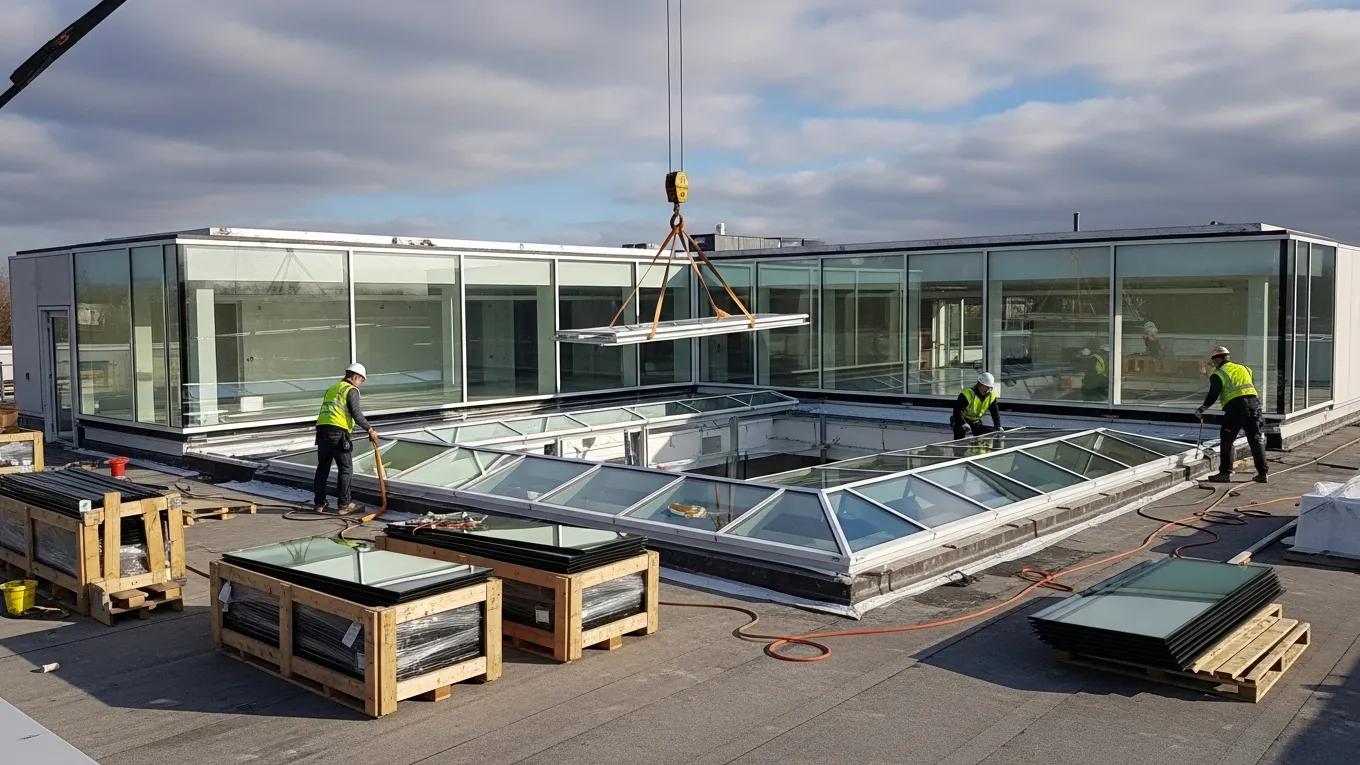
Flat roofs often simplify installation by providing level access and uniform deck thickness, reducing framing adjustments. Sloped or metal roofs introduce structural challenges such as pitched support assemblies and custom curbing, raising labor hours by up to 20 percent. Roof material—single-ply membrane versus built-up roofing—impacts flashing requirements and adherence methods. Complex roof penetrations around HVAC or mechanical units may require additional structural reinforcement, escalating cost forecasts.
What Are the Permit and Regulatory Costs for Commercial Skylights in Minneapolis?
Minneapolis building permits for commercial skylight installations generally cost between $200 and $600 per project, influenced by project valuation and scope. Engineers may need to review structural plans to verify roof penetrations comply with local codes, adding $500–$1,000 in plan review fees in some cases. Securing permits early prevents work stoppages, and budgeting for regulatory compliance ensures projects stay on track. Incorporating permit fees into initial cost estimates avoids surprise costs during installation.
How Do Customization and Smart Skylight Technologies Impact Costs?
Advanced glazing technologies such as electrochromic or photovoltaic glass introduce significant material premiums—often 40–60 percent above standard options. Integrating sensors, remote control systems, and automatic venting adds both hardware and programming fees, typically $1,000–$2,500 per unit for retrofit solutions. Custom curbs, architectural frames, and colored finishes drive up fabrication time, extending lead times by up to six weeks. While upfront costs rise, smart skylights can enhance occupant comfort and operational efficiency, offsetting investments through automated daylight control and ventilation.
What Role Do Materials Like Glazing and Flashing Play in Cost Variation?
High-performance glazing packages featuring triple-pane or argon-filled units attract a 20–30 percent material surcharge yet deliver substantial U-value improvements for cold-climate performance. Premium flashing materials such as stainless steel and thermoplastic membranes reduce leak risk and lengthen service life but cost 15–25 percent more than standard aluminum flashing. Careful selection of materials minimizes long-term maintenance expenses while optimizing thermal and moisture resistance. Balancing initial material investments with expected lifespan and energy savings supports a value-driven installation.
How Do Commercial Skylight Repair and Replacement Costs Compare in Minneapolis?
What Are Common Commercial Skylight Problems and Their Repair Costs?
Commercial skylight issues often include flashing deterioration, sealant failure, and interior condensation. Flashing repairs typically run $300–$800 per curb depending on roof access and membrane type. Replacing sealant and glazing gaskets can cost $200–$500 per unit while restoring proper drainage and water shedding. Addressing UV-caused glazing etching or frame corrosion may require component-level replacement, with part and labor costs totaling $500–$1,200. Timely repairs extend the life of existing units and preserve daylight performance without the full expense of new installations.
When Is Skylight Replacement More Cost-Effective Than Repair?
When repairs exceed 50 percent of replacement costs or recurring leaks persist, full unit replacement becomes economically justified. For aging skylights with compromised thermal performance, installing modern insulated units can deliver energy savings that offset installation premiums in three to seven years. Replacement also presents opportunities to upgrade to advance glazing, framing, and flashing systems. Investing in new units avoids frequent callbacks and aligns performance with current building standards.
How Can Preventative Maintenance Reduce Long-Term Skylight Expenses?
Routine inspections every six months uncover early signs of seal failure, debris buildup, and frame corrosion. Scheduled sealant renewal and cleaning services at $150–$300 per visit prevent water infiltration and maintain daylight transmittance. A proactive maintenance program reduces the likelihood of emergency repairs, preserves warranty coverage, and supports consistent energy savings. Integrating maintenance into facility management schedules simplifies budgeting and maximizes skylight service life.
What Are the Energy Efficiency Benefits and ROI of Commercial Skylights in Minneapolis?
How Do Commercial Skylights Reduce Energy Bills?
By admitting natural light, daytime artificial lighting needs can drop by 25–40 percent in core areas, equating to $0.10–$0.20 per square foot annual savings. Well-insulated skylights with low-E coatings curb heat loss in winter and limit solar heat gain in summer, easing heating and cooling loads. Studies show daylight-optimized spaces improve occupant focus and morale, potentially boosting productivity by up to 5 percent. These efficiency gains translate into tangible cost benefits when operations are modeled over typical building lifecycles.
What Government Incentives and Rebates Are Available for Energy-Efficient Skylights?
Minnesota’s energy rebate programs offer incentives of up to $2.00 per square foot on qualifying daylighting installations, reducing net project costs by 10–20 percent. Federal tax credits for high-performance fenestration can cover 10 percent of material expenses for commercially owned buildings. Leveraging utility-sponsored rebates and tax credits accelerates payback periods. Early coordination with incentive programs ensures projects meet performance and documentation requirements.
How Is Return on Investment Calculated for Commercial Skylight Installations?
ROI considers upfront installation cost, annual energy savings, maintenance expenses, and incentives. A simplified payback model divides net installation cost by annual combined savings from lighting and HVAC reduction. For a $20,000 skylight project yielding $3,000 annual savings, the payback period is approximately 6.7 years. Accounting for incentives shortens payback timelines and enhances internal rate of return. Clear financial modeling supports board-level approvals and capital expenditure planning.
How to Choose the Best Commercial Skylight Installer in Minneapolis?
What Questions Should You Ask Commercial Skylight Installers?
Ask about certified installation procedures, manufacturer affiliations, and warranty terms for both product and workmanship. Inquire about crew training, local project experience, and references from similar commercial projects. Confirm permit handling, safety programs, and cleanup practices. A detailed proposal with line-item cost breakdowns fosters transparency and builds trust before work begins.
How Does Allweather Roof Ensure Leak-Free and Quality Skylight Installations?
Allweather Roof combines proven installation techniques with adherence to manufacturer guidelines and SunWave™ Daylighting Systems standards. Their crews perform pre-installation inspections, precise curb fabrication, and multi-step flashing integration to eliminate water intrusion risks. Each project undergoes pressure testing and visual verification before handover, backed by a verified leak-free guarantee. This rigorous approach protects investment and minimizes future service calls.
What Are Examples of Successful Minneapolis Commercial Skylight Projects?
A Twin Cities office retrofit featured eight custom pyramid skylights, delivering 35 percent reduction in daytime artificial lighting. A suburban manufacturing facility installed tubular daylighting devices across interior spaces, cutting lighting energy costs by $12,000 annually. Retail and educational campuses have benefited from dome-style architectural skylights, enhancing aesthetics and occupant well-being. These case studies demonstrate how tailored skylight solutions balance cost, performance, and design goals.
What Are the Different Commercial Skylight Types and Their Cost Implications?
What Are Fixed Commercial Skylights and Their Pricing?
Fixed skylights feature stationary glazing and simplified curb mounting, offering broad daylight enhancement at the lowest price point. Typical costs range from $1,000 to $4,000 per unit depending on size and glazing options. These skylights require minimal mechanical components, reducing maintenance and potential leak points. Their straightforward design integrates seamlessly into new and existing commercial roof systems.
How Do Vented Skylights Differ: Manual vs. Electric Costs?
Manual vented skylights allow occupant-controlled airflow with crank handles or push-mechanisms, costing $1,500–$5,000 per unit. Electric vented models incorporate motors and sensors, raising the price to $2,000–$6,000. Electric operation adds convenience, automated climate control, and integration with building management systems. Both options improve indoor air quality but demand careful flashing and wiring coordination.
What Are Tubular Daylighting Devices and Their Commercial Benefits?
Tubular daylighting devices capture sunlight through a rooftop dome, channeling it via reflective tubes into interior spaces. Commercial costs typically range from $800 to $2,500 per device. Ideal for long corridors, restrooms, and storage areas, these systems offer high light-delivery efficiency with minimal roof penetrations. Their compact curbs simplify installation and reduce structural modifications.
How Do Dome and Pyramid Skylights Affect Architectural Appeal and Pricing?
Dome and pyramid skylights create striking visual focal points while providing panoramic daylight. Pricing starts at $2,500 and can exceed $8,000 per unit depending on custom framing and glass specifications. Architectural skylights require precise engineering and specialized flashing details to maintain watertight performance. Their premium appearance aligns with high-end office spaces, retail centers, and public buildings.
What Are the Differences Between Curb-Mounted and Deck-Mounted Skylights?
Curb-mounted skylights install on raised perimeter curbs, offering superior waterproofing and easy replacement access, with costs between $1,200 and $5,500 including curb construction. Deck-mounted units set directly onto the roof deck, reducing curb fabrication but demanding precise membrane integration, with pricing from $1,000 to $4,500. Curb systems provide more robust flashing attachment and simplified service, while deck-mounted solutions minimize changes to roof height. Choosing the optimal mounting style hinges on existing roof design, waterproofing strategies, and maintenance preferences.
What Are the Most Frequently Asked Questions About Commercial Skylight Costs in Minneapolis?
How Much Does It Cost to Install a New Commercial Skylight in Minneapolis?
New commercial skylight installation costs in Minneapolis generally span $1,000 to $7,000 per unit. Primary influences include skylight type—fixed, vented manual, or electric venting—along with glazing quality, frame materials, and labor rates.
What Factors Affect the Price of Commercial Skylight Installation?
Key cost drivers comprise skylight type, unit size, glazing and framing materials, local labor rates, roof complexity, and permit fees. Additional customization such as smart sensors, specialized flashing, and architectural designs further impacts budgets.
Are Commercial Skylights Energy-Efficient?
Modern commercial skylights with low-E coatings and insulated frames deliver significant energy efficiency by reducing reliance on artificial lighting and moderating heat transfer. Properly specified skylights contribute to 20–40 percent lighting energy savings and improved HVAC performance.
How Long Does Commercial Skylight Installation Take?
Typical commercial skylight installations require one to three days per unit for small to medium sizes, including curb preparation, flashing, glazing, and cleanup. Project schedules expand when multiple units, custom curbs, or complex roof conditions are involved, often requiring a week or more for larger deployments.
Can Skylights Be Added to Existing Commercial Roofs?
Yes, adding skylights to existing commercial roofs is feasible with curb-mounted or deck-mounted systems. Proper structural assessment, flashing integration, and membrane restoration ensure seamless performance without full roof replacement.
Skylight projects offer durable daylighting solutions that enhance building value, occupant comfort, and energy efficiency. With detailed cost insights, clear price drivers, and proven installation practices from Allweather Roof, Minneapolis businesses can move forward with confidence in their commercial daylighting investments.
Conclusion
Investing in commercial skylights not only enhances natural lighting but also significantly improves energy efficiency and occupant comfort. Understanding the cost factors and installation processes empowers Minneapolis businesses to make informed decisions that align with their budget and design goals. By choosing Allweather Roof, you ensure expert installation and long-term performance reliability. Explore our services today to elevate your commercial space with quality skylight solutions.