
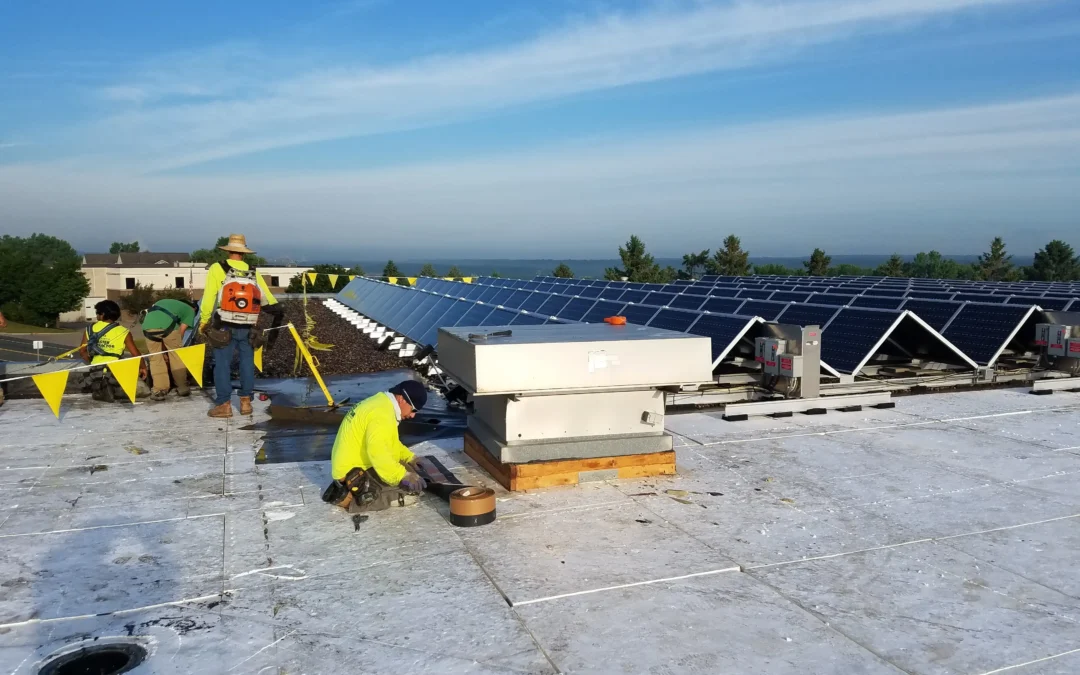
Mid-Year Commercial Roof Maintenance Checklist: What Minnesota Building Owners Should Do Before Fall
For commercial property owners and facility managers in Minnesota, August is more than the middle of summer—it’s one of the most important times of year to evaluate the condition of your commercial roofing system.
By this point, your roof has already endured months of freeze-thaw cycles, heavy snow loads, spring rain, hailstorms, strong winds, and increasing summer heat. While your commercial roof may appear to be in good condition from the ground, hidden damage from the first half of the year can develop into costly repairs if left unaddressed.
Late summer provides an ideal window for proactive maintenance. Weather conditions are generally favorable for inspections and repairs, roofing contractors often have better availability than they do in the fall, and addressing small issues now helps ensure your building is ready for the colder months ahead.
Whether you manage an office building, warehouse, manufacturing facility, healthcare campus, retail center, or multi-family commercial property, this mid-year checklist will help you protect your investment and extend the lifespan of your commercial roofing system.
Why August Is One of the Best Times to Inspect a Commercial Roof
Many building owners wait until they notice a leak before calling a commercial roofing contractor.
Unfortunately, by the time water enters the building, the roofing system may have been deteriorating for months.
A mid-year inspection allows you to:
- Identify damage caused by spring storms.
- Schedule repairs before fall weather arrives.
- Reduce the likelihood of emergency repairs.
- Preserve manufacturer warranties.
- Improve long-term maintenance planning.
- Budget for future roofing projects before year-end.
Minnesota’s harsh winters are demanding on commercial roofs. Addressing maintenance needs now is significantly easier—and often more affordable—than dealing with emergency repairs during freezing temperatures.
1. Inspect for Damage From Spring and Early Summer Storms
Minnesota experiences frequent thunderstorms, hail, and high winds throughout the spring and summer months.
Even if your building didn’t experience a noticeable leak, storms may have caused damage that’s difficult to detect from the ground.
A professional commercial roof inspection should evaluate:
- Roofing membranes
- Flashing
- Roof seams
- Edge metal
- Drainage systems
- Rooftop equipment
- Roof penetrations
High winds can loosen flashing and roofing materials, while hail may damage membranes or protective coatings without creating immediate leaks.
Catching storm damage early allows repairs to be completed before moisture begins entering the roofing system.
2. Check Roof Drains and Drainage Systems
Summer thunderstorms often bring heavy rainfall in a short period of time.
If roof drains, scuppers, gutters, or downspouts become blocked by debris, water may begin ponding on your commercial roof.
Standing water is one of the leading causes of premature roof deterioration.
Inspect for:
- Clogged roof drains
- Blocked scuppers
- Debris accumulation
- Slow drainage
- Ponding water after rainfall
- Vegetation growth
Proper drainage helps reduce unnecessary stress on roofing membranes while minimizing the risk of leaks.
3. Look for Membrane Damage Caused by UV Exposure
Commercial roofing systems spend the entire summer exposed to intense sunlight.
Over time, ultraviolet radiation can contribute to:
- Membrane shrinkage
- Surface cracking
- Drying and aging
- Loss of protective coatings
- Premature material deterioration
Flat commercial roofing systems such as TPO, EPDM, and PVC are designed to withstand UV exposure, but routine inspections help identify areas where aging or weathering may require attention.
Addressing these issues during the summer helps extend the service life of the roofing system.
4. Inspect Flashing Around Rooftop Equipment
Commercial roofs often contain dozens of penetrations.
These include:
- HVAC units
- Exhaust fans
- Vent stacks
- Mechanical supports
- Electrical conduit
- Skylights
Flashing around these components expands and contracts throughout the year due to changing temperatures.
Storm activity can also loosen flashing or damage sealants.
Because roof penetrations are among the most common sources of commercial roof leaks, they should receive special attention during every inspection.
5. Evaluate Roof Seams and Surface Conditions
Many commercial roofing systems rely on heat-welded or adhered seams to create a watertight barrier.
Over time, exposure to weather and temperature changes may affect these seams.
A commercial roofing contractor should inspect for:
- Open seams
- Wrinkled membrane
- Blisters
- Surface punctures
- Mechanical damage
- Loose edge details
- Signs of movement around rooftop equipment
Small issues discovered during routine maintenance are typically much less expensive to repair than widespread membrane failures.
6. Schedule Preventive Repairs Before Fall Weather Arrives
One of the biggest mistakes commercial property owners make is postponing minor roof repairs because “the roof isn’t leaking yet.”
Unfortunately, small roofing issues rarely stay small.
A loose flashing detail, minor membrane puncture, or deteriorating sealant can quickly become a major repair after weeks of heavy rain or the first freeze-thaw cycle of the season.
Late summer is one of the best times to complete preventive commercial roof repairs because:
- Weather conditions are generally more predictable.
- Roofing materials perform well in warmer temperatures.
- Contractors often have greater scheduling flexibility before the busy fall season.
- Repairs can be completed before winter weather limits roofing work.
Addressing minor issues now helps reduce the likelihood of emergency service calls later in the year.
7. Review Your Roof Maintenance Budget Before Year-End
July is also an excellent time to evaluate your maintenance budget.
A professional commercial roof inspection provides valuable information that can help property owners and facility managers prioritize repairs and plan future expenditures.
Rather than reacting to unexpected failures, you can create a maintenance strategy based on the current condition of your roofing system.
Your roofing contractor may recommend:
- Immediate repairs
- Preventive maintenance
- Restoration options
- Capital improvement planning
- Estimated remaining roof life
Having this information before budgeting season allows building owners to make informed financial decisions rather than emergency ones.
8. Document Your Commercial Roof’s Current Condition
Keeping detailed records of your commercial roofing system is an often-overlooked but valuable part of building management.
High-quality documentation can help:
- Track roof conditions over time.
- Compare annual inspections.
- Support warranty requirements.
- Simplify insurance claims.
- Provide records during property sales or refinancing.
- Plan future maintenance projects.
Drone roof inspections have become especially valuable because they provide comprehensive aerial imagery that can be compared year after year.
Instead of relying on scattered photographs from a walk-on inspection, building owners receive a complete visual record of the roofing system’s condition.
9. Start Preparing for Minnesota’s Fall and Winter Weather
Although winter may seem months away, July is the ideal time to begin preparing your commercial roof for colder weather.
Minnesota winters place tremendous stress on commercial roofing systems through:
- Heavy snow loads
- Ice accumulation
- Freeze-thaw cycles
- Wind-driven precipitation
- Rapid temperature fluctuations
Any weakness in the roofing system today is likely to become a larger issue once winter arrives.
Preparing now allows enough time to complete recommended repairs before weather conditions become less favorable.
10. Schedule a Professional Commercial Roof Inspection
While facility teams can perform basic visual observations, many roofing issues aren’t visible from the ground—or even during a casual walk across the roof.
A professional commercial roof inspection provides a far more comprehensive assessment.
An inspection may include:
- High-resolution drone imaging
- Detailed roof mapping
- Inspection of membranes and flashing
- Evaluation of rooftop equipment
- Drainage assessment
- Identification of storm damage
- Thermal imaging for hidden moisture (when appropriate)
- Written reports with repair recommendations
Routine inspections help identify problems before they become disruptive or expensive, giving building owners confidence that their roofing system is ready for the seasons ahead.
Why Preventive Maintenance Pays Off
Commercial roofing systems are designed to last for decades—but only when they’re properly maintained.
Preventive maintenance offers significant long-term benefits, including:
- Extending the lifespan of the roofing system
- Reducing emergency repair costs
- Minimizing business interruptions
- Protecting manufacturer warranties
- Supporting long-term capital planning
- Improving overall building performance
For many commercial properties, routine maintenance costs only a fraction of what major roof repairs or premature replacement can require.
Make the Most of Minnesota’s Summer Roofing Season
Minnesota’s summer provides one of the best opportunities to inspect, maintain, and repair commercial roofing systems before fall and winter weather arrive.
Rather than waiting for leaks, storm damage, or emergency repairs, proactive maintenance allows building owners to protect one of their property’s most valuable assets while reducing long-term costs.
If your commercial roof hasn’t been professionally inspected this year, now is an ideal time to schedule an assessment. A mid-year inspection can identify hidden issues, document your roof’s condition, and help ensure your building is prepared for whatever Minnesota weather brings next.
Taking action during the summer isn’t just about preventing problems—it’s about protecting your investment, improving long-term roof performance, and avoiding unexpected disruptions when the seasons change.