
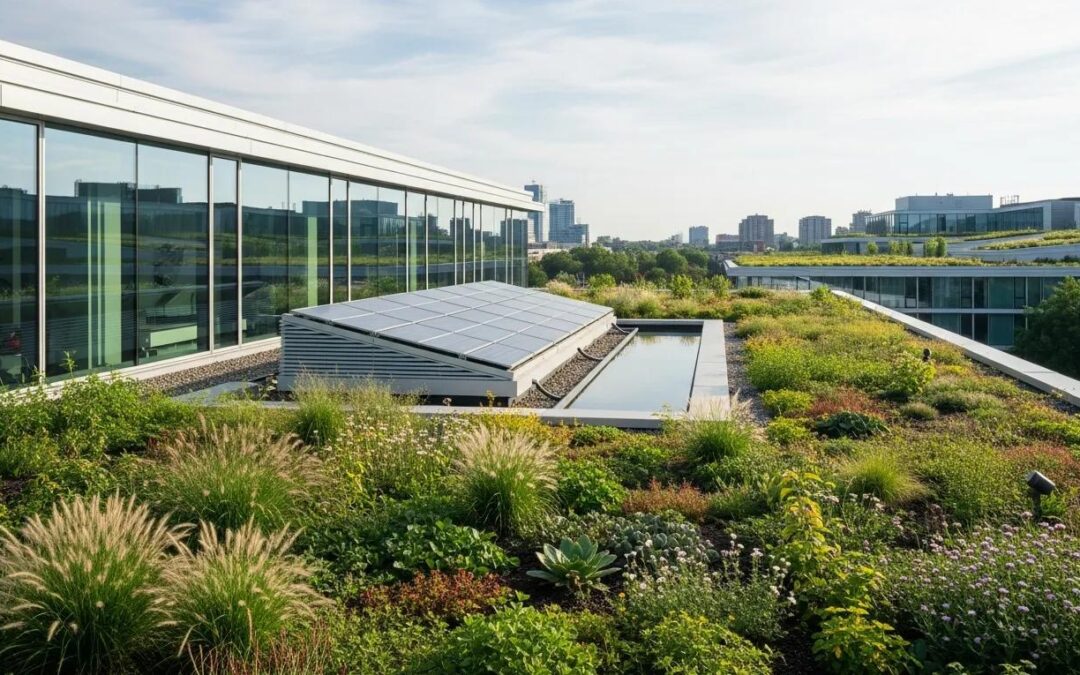
Commercial Green Roof Installation and Sustainable Roofing Solutions for Businesses

Commercial green roof installation and sustainable roofing solutions for businesses deliver eco-friendly roofing systems that integrate vegetation, thermal insulation, stormwater control and structural resilience. By covering flat or low-sloped commercial rooftops with growing medium and plants over a waterproof membrane, these living roofs enhance energy efficiency, manage rainfall on-site and extend roof lifespan. Owners and property managers in the Midwest gain both environmental compliance and financial returns, while architects and contractors benefit from design flexibility and urban gardening opportunities. This article explores key benefits, system types, installation best practices, maintenance strategies, cost-ROI considerations, integration with existing roofing services and common questions—establishing a complete roadmap for commercial clients considering green roofs.

What Are the Key Benefits of Commercial Green Roofs for Businesses?

Commercial green roofs provide significant advantages for energy savings, stormwater retention, biodiversity and asset longevity. A living roof acts as an insulating layer, reducing heat gain in summer and heat loss in winter, which improves operational efficiency and lowers utility expenses. It also detains and filters rainfall, easing pressure on municipal sewers and supporting regulatory compliance for stormwater management. Beyond these functional gains, vegetated roofs foster urban habitat, contribute to heat-island mitigation and enhance employee well-being through improved air quality and rooftop garden access. Understanding these benefits lays the foundation for selecting the ideal system type and aligning with sustainability targets.

How Do Green Roofs Improve Energy Efficiency and Reduce Costs?

Green roofs improve energy efficiency by insulating building envelopes, reducing heat transfer through the roof assembly and lowering heating and cooling costs. The growing medium and plant canopy trap air, creating a thermal buffer that decreases reliance on HVAC systems. Seasonal energy consumption can drop by up to 25 percent in cooling months and 15 percent in heating months, delivering measurable cost savings. A vegetated roof’s evapotranspiration effect further cools the rooftop surface, promoting indoor comfort and reducing peak energy demand charges. These efficiency gains translate into two-to-seven-year payback periods for many commercial installations. For more on energy efficiency, see Energy Saver – Energy Efficient Home Design.

Diagram illustrating the insulation and cooling effects of green roofs on commercial buildings.

In What Ways Do Green Roofs Support Stormwater Management and Flood Mitigation?

Green roofs support stormwater management by retaining and slowly releasing rainfall, which reduces runoff volumes and peak flow rates. Extensive systems can absorb up to 70 percent of annual precipitation, while intensive systems with deeper soil retain even greater volumes. The layered structure—comprising drainage, growing medium and vegetation—filters pollutants and improves water quality before discharge. By moderating stormwater peaks, living roofs help businesses comply with local regulations and avoid costly detention infrastructure. This natural retention also mitigates flood risk and erosion around the building perimeter. For detailed stormwater management guidelines, visit the EPA Green Roofs and Stormwater Management page.

Vegetation LayerGrowing Medium (Soil)Drainage LayerWaterproof MembraneRainwater Infiltration & RetentionIllustration of green roof layers contributing to stormwater retention and filtration.

Technical Considerations for Commercial Green Roof Retrofits in Urban Centres

The technical issues of concern were identified through a desktop literature review and stakeholder focus groups conducted in Sydney in 2012. The aim of this paper is to illustrate the potential for green roof retrofitting of commercial buildings within Sydney’s Central Business District (CBD). The paper will identify the technical challenges requiring resolution for the successful implementation of green roofs in the CBD. Furthermore, it will outline the potential benefits of green roofs in the CBD, such as enhanced stormwater management, mitigation of the urban heat island effect, and increased biodiversity. The paper will also identify potential impediments to green roof implementation in the CBD, including cost, insufficient awareness, and a lack of expertise.

Technical considerations in green roof retrofit for stormwater attenuation in the Central Business District, S Wilkinson, 2012

How Do Green Roofs Enhance Biodiversity and Urban Gardening?

Green roofs enhance biodiversity by providing new habitats for insects, birds and pollinators in dense urban landscapes. Native sedum, wildflowers and grasses support ecological networks, while modular planters enable rooftop gardens and productive planting. Intensive living roofs can sustain small trees, shrubs and vegetable beds, creating communal green spaces for staff and tenants. Urban gardening initiatives on commercial rooftops contribute to wellness programs and corporate sustainability goals, transforming underutilised space into ecological assets that reinforce brand reputation and stakeholder engagement. Learn more about urban gardening benefits at Urban Agriculture.

Graphic depicting the biodiversity benefits of green roofs in urban environments.

Governance and Policy for Green Roofs in Stormwater Management

This paper investigates the governance of climate adaptation, with a specific focus on the implementation of green roofs for stormwater retention. It examines the role of policy instruments, regulations, and stakeholder engagement in facilitating the adoption of green roof technology. The study analyses existing governance frameworks and identifies challenges and opportunities for promoting green roofs in urban environments. It highlights the importance of collaboration between government agencies, private sector actors, and the community to overcome barriers and ensure the successful integration of green roofs into urban planning and development.Who governs climate adaptation?

Getting green roofs for stormwater retention off the ground, HLP Mees, 2013

Can Green Roofs Reduce the Urban Heat Island Effect for Commercial Properties?

Green roofs reduce the urban heat island effect by shading roof surfaces and promoting evaporative cooling, which lowers local air temperatures. Vegetation intercepts solar radiation, preventing it from heating conventional roofing materials and releasing heat back into the atmosphere. This cooling impact can reduce rooftop temperatures by 30 °C during peak sun hours, contributing to neighbourhood temperature moderation. As a passive climate mitigation measure, living roofs support corporate climate targets and community resilience in the Midwest’s warm summers. For more on urban heat island mitigation, see EPA Heat Island Effect.

Conventional Roof60°CGreen Roof30°CTemperature ReductionComparison of rooftop surface temperatures showing the cooling effect of green roofs.

How Do Green Roofs Extend Roof Lifespan and Increase Property Value?

Green roofs extend roof lifespan by protecting underlying membranes from ultraviolet radiation, thermal cycling and mechanical abrasion. The vegetative cover shields roofing materials, potentially doubling membrane service life and deferring replacement costs. This longevity advantage, combined with enhanced energy savings and stormwater benefits, increases overall property value and ROI. Appraisers recognise the premium associated with sustainable building features, making green roofs a strategic investment for commercial real estate portfolios. For insights on property value impacts, visit USGBC Green Roofs and Property Value.

What Are the Aesthetic and Employee Well-being Benefits of Living Roofs?

Living roofs offer aesthetic appeal through lush plantings, seasonal colour and innovative rooftop design that enhances corporate identity. Access to rooftop gardens supports employee well-being by providing natural settings for breaks, meetings and events. Exposure to greenery has been shown to reduce stress, boost morale and improve cognitive function, fostering a healthier workplace culture. These human-centric benefits complement mechanical performance gains and strengthen organisational sustainability narratives. For more on workplace wellness, see WELL Building Standard.

What Types of Commercial Green Roof Systems Are Available?

Commercial green roof systems fall into four main categories—extensive, intensive, semi-intensive (biodiverse) and modular—each tailored to maintenance levels, vegetation diversity and structural capacity. Extensive systems feature shallow substrates (50–150 mm) with hardy sedum or grass species for low maintenance and lightweight load. Intensive systems support deeper soils (200–600 mm) and diverse plantings including shrubs, perennials and vegetables, delivering park-like rooftop amenities. Semi-intensive designs bridge these options by combining moderate substrate depths with varied native species to maximise biodiversity. Modular systems use pre-planted trays or boxes that simplify installation, maintenance and relocation without extensive on-site assembly. Selecting the appropriate system aligns performance objectives with structural constraints and landscape aspirations.

System TypeMaintenance LevelTypical VegetationStructural Complexity
ExtensiveLowSedum mixes, drought-tolerant herbsMinimal extra load
IntensiveHighPerennials, shrubs, edible plantsSignificant support
Semi-IntensiveModerateNative wildflowers, grassesBalanced depth
ModularFlexibleTray-based sedum, herb plantersSimplified install

Selecting the right configuration ensures that the living roof meets energy, ecological and aesthetic goals while respecting load and budget constraints.

How Is a Commercial Green Roof Installed and Designed for Sustainability?

Commercial green roof installation begins with a thorough structural assessment to verify load-bearing capacity, followed by waterproofing and drainage planning. Design teams integrate root-barrier membranes, waterproofing layers and filter fabrics before placing drainage boards and growing medium. Plant selection focuses on native and adaptive species that thrive with local climate conditions and irrigation capabilities. Sustainable design considerations include solar orientation, wind exposure, access routes, safety railings and integration with rooftop equipment. Permits and compliance with Midwest stormwater regulations and green building certification standards guide the approval process. For detailed installation guidelines, refer to the Green Roof Design and Installation Guide.

  • Conduct structural and load-bearing analysis to determine reinforcement needs.
  • Apply root barrier, waterproof membrane and protection boards to guarantee watertight integrity.
  • Install drainage and filter layers to manage excess moisture and prevent substrate loss.
  • Place engineered growing medium tailored to system type and plant requirements.
  • Plant vegetation or deploy modular trays, ensuring even coverage and healthy establishment.

This step-by-step approach minimises installation risks and promotes long-term roof performance and sustainability.

How Should Commercial Green Roofs Be Maintained for Longevity and Performance?

Routine maintenance is essential to preserve living roof performance, aesthetics and structural health. A scheduled inspection every quarter should include vegetation health checks, substrate consolidation and drainage outlet clearing. Irrigation and fertilisation plans vary by system type; extensive roofs may rely on natural precipitation with occasional supplemental watering, while intensive roofs demand automated irrigation and nutrient management. Pest and disease monitoring involves visual surveys and organic control methods to protect plant communities. Repairs to the waterproof membrane or drainage elements should be coordinated with commercial roof repair specialists to address any issues promptly. For maintenance best practices, see Green Roof Maintenance Guide.

TaskFrequencyPurpose
Vegetation inspectionQuarterlyAssess plant health and replace gaps
Drainage outlet clearingQuarterlyPrevent waterlogging and membrane stress
Irrigation system checkBi-monthly (intensive)Ensure consistent moisture levels
Pest and disease controlSeasonalMaintain ecological balance and coverage
Membrane and edge repairAnnual or as neededPreserve waterproof integrity

Proactive maintenance extends roof lifespan and safeguards the environmental and financial benefits of green roofing.

What Are the Costs, ROI, and Incentives for Commercial Green Roof Installation?

Commercial green roof costs vary by system depth, plant selection and roof complexity. Extensive systems typically range from £150 to £250 per square metre, while intensive installations can reach £350 to £600 per square metre. Higher upfront investments generate long-term returns through energy savings, stormwater fee reductions and extended membrane life. ROI analyses often show payback in 5–10 years based on regional energy rates and maintenance budgets. Businesses in the Midwest may access grants, tax incentives and stormwater fee credits from local authorities and environmental programmes that further improve project economics. Case studies reveal total lifecycle cost reductions of up to 30 percent in organisations that integrate green roofs with routine roof repair and energy management strategies. For financial incentives, consult the Database of State Incentives for Renewables & Efficiency (DSIRE).

System TypeInitial Cost (£/m²)Maintenance FrequencyROI Timeline
Extensive150–250Low5–7 years
Intensive350–600High7–10 years
Modular200–400Moderate6–8 years

Grant programmes and tax credits can reduce capital expenditure by 10–25 percent, boosting ROI and encouraging sustainable investments.

How Do Commercial Green Roofs Integrate with Existing Roofing and Sustainability Services?

Integrating green roof installation with commercial roof repair and maintenance services ensures seamless project delivery and ongoing performance. Service providers can coordinate waterproof membrane renewal, roof coating applications and green roof assembly in a single contract to reduce downtime and avoid warranty gaps. Living roofs also support environmental certifications such as LEED, BREEAM and local green building standards by contributing points for energy performance, stormwater management and biodiversity net gain. Smart monitoring systems can track soil moisture, roof temperature and system health over time, enabling data-driven maintenance and maximising sustainable outcomes. For certification details, visit the USGBC LEED Certification and BREEAM websites.

  • Align membrane replacement and green roof assembly to minimise installation complexity.
  • Bundle maintenance contracts for both hard roof surfaces and vegetated areas under one service agreement.
  • Leverage sustainability credits and certification frameworks to document environmental performance.
  • Deploy rooftop sensors and analytics platforms for real-time monitoring and long-term optimisation.

Co-managed roofing and living roof services reinforce building resilience and operational efficiency.

What Are Common Questions About Commercial Green Roofs?

Commercial clients often seek clarity on benefits, costs, system suitability and performance. Typical concerns include energy savings potential, installation complexity, maintenance demands and available incentives. Addressing these questions with data-driven insights helps stakeholders make informed decisions and aligns green roof projects with organisational priorities. By understanding common queries, All Weather Roof can tailor consultations, design proposals and service packages to meet specific business needs and regulatory requirements.

What Are the Main Benefits of a Green Roof for a Business?

Businesses benefit from green roofs through lower energy bills, enhanced stormwater control, improved air quality and extended roof lifespan. The combined effect of insulation, evapotranspiration and membrane protection yields substantial operational savings and asset value increases.

How Much Does a Commercial Green Roof Cost?

Initial costs depend on system depth, plant variety and roof complexity, typically ranging from £150 to £600 per square metre. Incentives and bundling with roof repair services can reduce capital outlay and accelerate return on investment.

What Types of Green Roofs Are Suitable for Commercial Properties?

Commercial buildings can host extensive, semi-intensive, intensive or modular green roof systems. Each option balances maintenance requirements, vegetation diversity and structural load capacities to match project goals.

Do Green Roofs Improve Thermal Performance of Buildings?

Yes, green roofs enhance thermal performance by reducing heat transfer across the roof assembly. The vegetative layers act as natural insulation, cutting heating and cooling loads and stabilising indoor temperatures.

Are There Government Incentives for Installing Green Roofs?

Many Midwest municipalities offer stormwater fee credits, grant funding and tax incentives for green infrastructure projects. Eligibility criteria vary by jurisdiction, with programmes typically rewarding stormwater mitigation and energy efficiency improvements.

Green Roof Infrastructure via Environmental Policy Instruments

Conventional construction practices offer limited scope for environmental remediation in urban settings. As concerns for environmental improvement in urban areas become more prevalent, innovative practices that generate ecosystem services and ecologically functional land cover in cities will be in higher demand. Green roofs are a prime example of such a practice. The past decade has witnessed the rapid expansion of the North American green roof industry, driven by international green roof conferences, demonstration sites, case studies, and scientific research. This study evaluates existing international and North American green roof policies at the federal, municipal, and community levels. Green roof policies can be broadly categorised, including direct and indirect regulation, direct and indirect financial incentives, and the funding of demonstration or research projects.

Establishing green roof infrastructure through environmental policy instruments, Unknown Author, 2008

Commercial green roof projects succeed when these questions are answered proactively, guiding stakeholders through benefits, costs, system selection and regulatory pathways.

Commercial building owners and property managers in the Midwest seeking to enhance sustainability, reduce operational costs and extend roof service life will find that integrating a green roof with professional roofing and maintenance services offers unmatched value. By partnering with an experienced commercial roofing specialist, businesses can achieve energy efficiency, stormwater compliance and wellness objectives—all while building ecological resilience and long-term asset performance.

Commercial green roofs represent a strategic investment that aligns environmental stewardship with fiscal responsibility, earning both regulatory approval and stakeholder acclaim.

Conclusion

Integrating commercial green roofs into your business strategy not only enhances sustainability but also delivers significant cost savings and improved asset longevity. These eco-friendly solutions provide energy efficiency, effective stormwater management, and a boost to employee well-being, reinforcing your commitment to environmental stewardship. By choosing the right green roof system, you can align with regulatory standards while maximizing your return on investment. Discover how our expert services can help you implement a green roof that meets your unique needs today.