
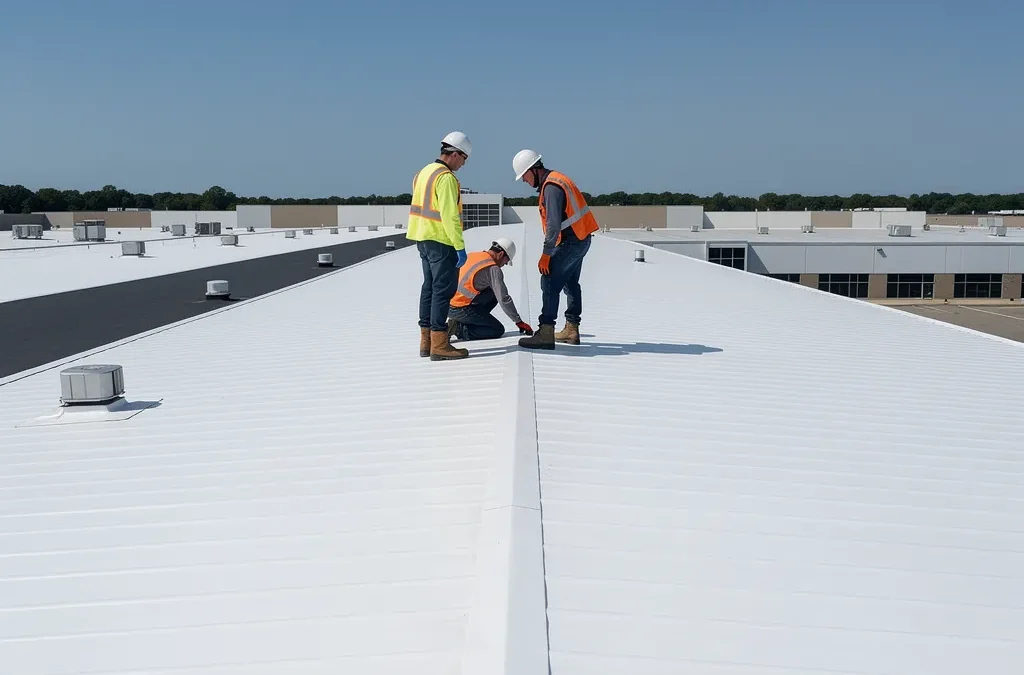
Find and Fix: Expert Commercial Roof Leak Repair and Detection Services
Commercial roof leaks can undermine a building’s structural integrity and drive up maintenance costs if they remain undetected. This guide shows commercial building owners, property managers, architects and contractors in the Midwest how to spot hidden leaks, use advanced detection techniques, understand root causes, compare repair options, establish preventative maintenance and choose a certified partner for fast, reliable service. Readers will learn clear indicators of water infiltration, expert diagnostic methods like infrared thermography, primary failure points such as ponding water and flashing breaches, practical patching and re-roofing solutions for EPDM, TPO and metal systems, maintenance plans to avoid future leaks and why Allweather Roof’s nearly century-long experience, 24/7 emergency response and free assessments set a new standard in commercial roof leak repair.
What Are the Common Signs of a Commercial Roof Leak?
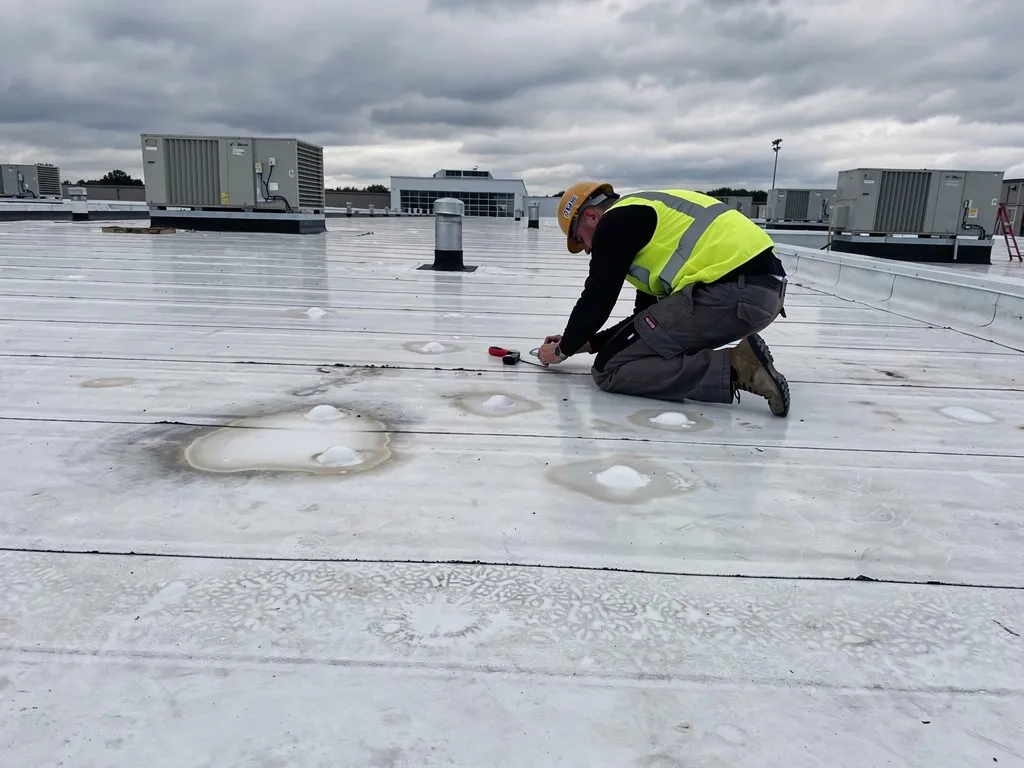
Common signs of a commercial roof leak include visible water stains, musty odours, membrane blistering and unexpected energy bill increases, each indicating moisture intrusion that can compromise insulation and structure. Recognising these indicators early prevents costly structural damage and business disruption. Below is a concise overview of the principal symptoms to watch for.
- Water stains on ceilings or walls appear as discoloured patches where roof membranes allow moisture penetration.
- Musty odours and mold growth occur when trapped water supports microbial activity beneath the roof surface.
- Blistering or bubbling of roofing membranes signals trapped moisture or gas pockets lifting the material.
- Sudden spikes in heating or cooling costs often relate to compromised insulation from hidden leaks.
Early detection of these signs leads directly to targeted investigation methods that minimise downtime and repair costs, which we will examine next.
How to Identify Water Stains and Ceiling Damage
Water stains present as irregular, darkened areas on ceilings and wall joints once moisture breaches the roofing membrane. Tracking these patches often reveals the approximate drip location, guiding technicians to inspect the corresponding roof area. Identifying the stain boundary and testing with a moisture meter confirms active water intrusion, ensuring repair crews address the exact source rather than cosmetic damage alone. This visual cue sets the stage for advanced diagnostic methods like infrared thermography.
Why Musty Odours and Mold Indicate Roof Leaks
Musty odours arise when persistent moisture creates an environment conducive to mold and mildew under insulation or within ceiling cavities. Spores proliferate in hidden pockets, releasing volatile organic compounds that produce a distinct, stale smell. Detecting this odour during routine walkthroughs signals the need for moisture mapping, which uncovers concealed leaks before they compromise indoor air quality and structural elements. Addressing mold at its source also prevents health risks for occupants.
How Blistering and Membrane Damage Reveal Roof Issues
Blistering appears as raised bubbles on single-ply membranes when water vapor mixes with trapped air beneath the surface. Over time, these blisters rupture, creating punctures that admit rainwater directly onto the underlying deck. Inspectors use visual surveys to mark blister locations, then perform electronic leak detection to assess membrane integrity around each defect. Repairing these compromised areas restores watertightness and prevents further substrate deterioration.
Can Increased Energy Bills Signal Hidden Roof Leaks?
Yes, unexpected increases in energy consumption often correlate with insulation saturation from roof leaks. Wet insulation loses its R-value, forcing HVAC systems to work harder to maintain set temperatures. By comparing utility bills over dry and wet periods, property managers confirm a link between rising costs and possible leaks. Quantifying this impact underscores the financial benefits of prompt roof repair and preventive maintenance.
How Do Experts Detect Commercial Roof Leaks?
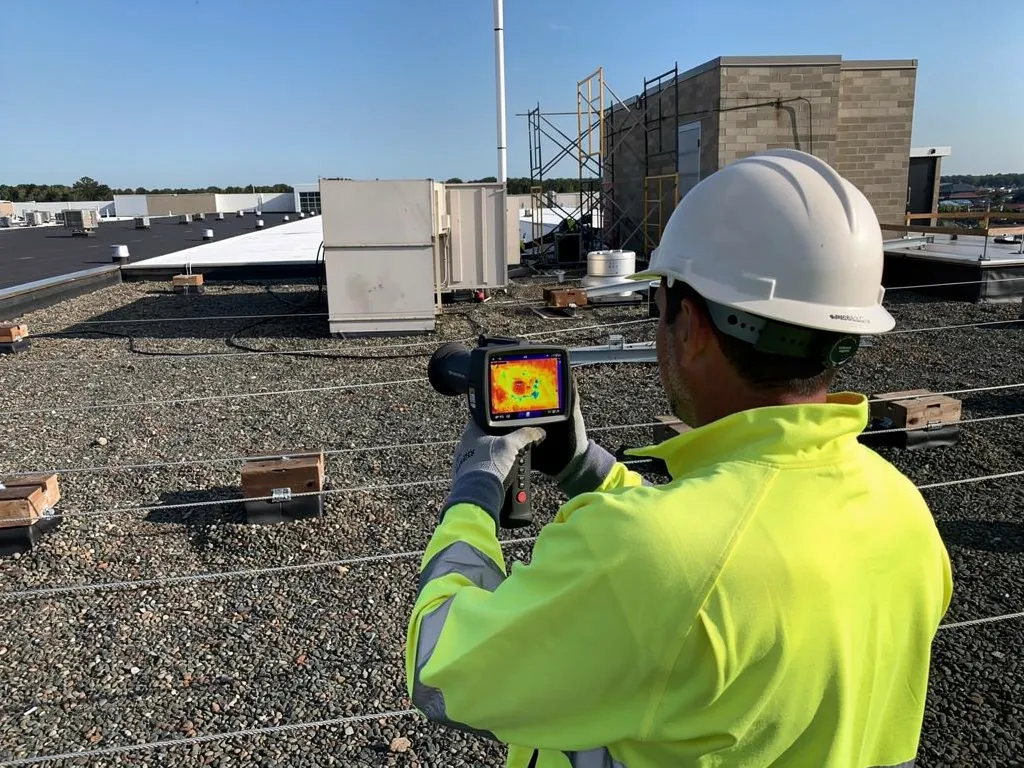
Experts detect commercial roof leaks through a combination of visual inspection, infrared thermography, electronic leak detection, water testing and moisture-meter surveys. Each method provides unique insights into moisture distribution and membrane breaches, helping technicians locate and document leaks without unnecessary removal of roof components.
| Method | Tool/Technique | Benefit |
|---|---|---|
| Infrared Thermography | Infrared Camera | Identifies hidden moisture by temperature variance |
| Electronic Leak Detection | Conductivity Probe | Pinpoints breaches in non-conductive roof systems |
| Water Testing | Controlled Hose Spray | Verifies leak source under real-world conditions |
| Moisture Meter Surveys | Pin-type/Non-invasive Meter | Measures water content in insulation and deck |
By layering these techniques, technicians build a comprehensive moisture map that guides targeted repairs, reduces guesswork and limits repair costs. The next section explains each method in more detail.
What Is Infrared Thermography and How Does It Work?
Infrared thermography works by detecting temperature differences on a roof surface, since wet areas emit heat differently than dry materials. During an infrared scan, a thermal camera captures images that highlight cooler zones where moisture has accumulated. This non-destructive technique enables technicians to survey large roof areas quickly, prioritise repair zones and verify successful restoration after work completion. In October 2025, drone-mounted infrared cameras have further improved survey speed and safety.
Non-destructive Water Leak Detection with Infrared Thermography … hence; estimating variations due to water leakage would be more accurate. … IR water leak detection method. In order to consider the temporal temperature variation due to water leakage …Non-destructive water leak detection using multitemporal infrared thermography, R Gawai, 2021
How Electronic Leak Detection Pinpoints Roof Breaches
Electronic leak detection employs low-voltage conductance to identify membrane breaches on electrically non-conductive systems such as PVC and EPDM. A probe transmits a signal across the roof surface; when it encounters water at a breach, the circuit completes and marks the exact location. This precise method avoids unnecessary cutting and ensures minimal disturbance to roof membranes during repair planning.
Infrared Thermography for Building Diagnostics and Water Leak Detection … inspection using IR thermography is typically a recorded visual display (digital image) of the image, known as a thermograph. … due to the ingress of water (i.e. from water leakage, condensation) …Infrared thermography for building diagnostics, CA Balaras, 2002
When Is Water Testing Used for Leak Detection?
Water testing is used when other methods fail to pinpoint the leak or when isolated patches require verification. Crews apply controlled water streams to specific roof sections while a team inside watches for dripping. This hands-on approach confirms the leak source under actual rainfall simulation, delivering definitive results even on complex roof geometries.
What Role Do Moisture Meters Play in Leak Diagnosis?
Moisture meters measure water content in insulation and roof decks, translating readings into actionable data for repair prioritisation. Pin-type meters penetrate materials to assess depth-specific moisture, while non-invasive meters scan surface moisture without penetration. Technicians use these readings to monitor dry-out progress after repair and ensure insulation regains full thermal performance.
What Are the Primary Causes of Commercial Roof Leaks?
Commercial roof leaks arise from aging materials, installation errors, ponding water, flashing failures and weather damage, each compromising membrane integrity over time. Understanding these root causes enables building owners to address systemic weaknesses rather than applying temporary fixes.
| Cause | Mechanism | Impact |
|---|---|---|
| Aging Materials | Membrane fatigue and UV degradation | Cracking, brittleness and moisture ingress |
| Poor Installation | Improper seam welding or fastener placement | Gaps at seams and attachment points |
| Ponding Water | Standing water on low-slope areas | Accelerated membrane breakdown |
| Flashing Failures | Corroded or mis-sealed metal flashings | Water entry around penetrations |
| Weather Damage | Wind uplift, hail impact or thermal shock | Tears, punctures and seam separation |
Identifying which factors are at play on a specific roof helps target long-term repairs and preventive measures, which we will explore in the next section.
How Does Aging Roofing Material Lead to Leaks?
Aging materials lose elasticity and resistances to UV radiation, causing membranes to become brittle and develop micro-cracks. Over time, thermal cycling widens these fissures, allowing rainwater to penetrate and saturate insulation. Proactive membrane replacement or recoating at manufacturer-recommended intervals reduces the risk of leaks before they manifest visibly.
Why Is Poor Installation a Common Leak Cause?
Improper installation techniques—such as misaligned seams, insufficient adhesive application or incorrect fastener spacing—create points of weakness where water can enter. Even high-quality roofing materials fail prematurely when seams separate or fasteners back out. Ensuring certified installation by experienced technicians preserves membrane warranties and extends roof lifespan.
How Does Ponding Water Affect Flat Commercial Roofs?
Ponding water occurs when low spots on a flat or low-slope roof fail to drain within 48 hours after rainfall. Prolonged ponding accelerates membrane breakdown through constant moisture exposure and microbial growth. Regular roof surveys that identify drainage issues and installation of tapered insulation or additional drains mitigate this chronic cause of leaks.
What Flashing and Penetration Failures Cause Leaks?
Flashings and roof penetrations—such as vents, skylights and HVAC curbs—are common weak points where flashing materials can corrode, sealants fail or metal components detach. Water exploits these gaps first, so regular inspection and resealing of flashings ensures continued water tightness at every penetration.
How Does Weather Damage Contribute to Roof Leaks?
Severe weather events—hailstorms, high winds or extreme temperature swings—can tear membranes, lift seams or rupture flashings. Even minor hail impacts weaken membrane layers over time. After major storms, prompt roof surveys and emergency repairs prevent small breaches from escalating into widespread leaks.
What Commercial Roof Leak Repair Solutions Are Available?
Repair solutions range from targeted patching and sealant applications to full re-roofing, each chosen based on roof type, leak severity and budget considerations. Timely selection of the proper method restores watertight integrity and extends service life.
How Are Patching and Sealants Used in Leak Repairs?
Patching involves cutting out the damaged membrane area, replacing it with matching material and sealing edges with compatible adhesives. Sealants are used around flashings, seams and penetrations to fill micro-cracks and prevent water entry. This cost-effective approach typically suits isolated leaks and delays the need for more extensive work.
When Is Re-Roofing the Best Solution?
Re-roofing—or installing a new membrane over the existing roof—becomes the most efficient option when damage is widespread or insulation has saturated over large areas. This comprehensive solution eliminates old membranes, restores thermal performance and reinstates full warranty coverage, delivering reliable protection for decades.
How Are EPDM, TPO, and Metal Roof Leaks Specifically Repaired?
EPDM leaks are patched using adhesive-backed EPDM patches and primer. TPO repairs require heat-welding or chemical welding of matching TPO membranes for seamless integration. Metal roof leaks around fasteners and seams are addressed with high-performance metal roof caulks and seam tapes designed to expand and contract with temperature shifts. Selecting the correct material and method ensures long-term leak prevention.
What Emergency Repair Options Are Offered 24/7?
Emergency crews deploy rapid-curing roof sealants, temporary tarps and edge flashing clips to stop active leaks immediately, even after hours. Allweather Roof’s 24/7 emergency service ensures water intrusion halts within hours, protecting interior finishes and inventory until permanent repairs can be scheduled.
How Can Preventative Maintenance Help Avoid Commercial Roof Leaks?
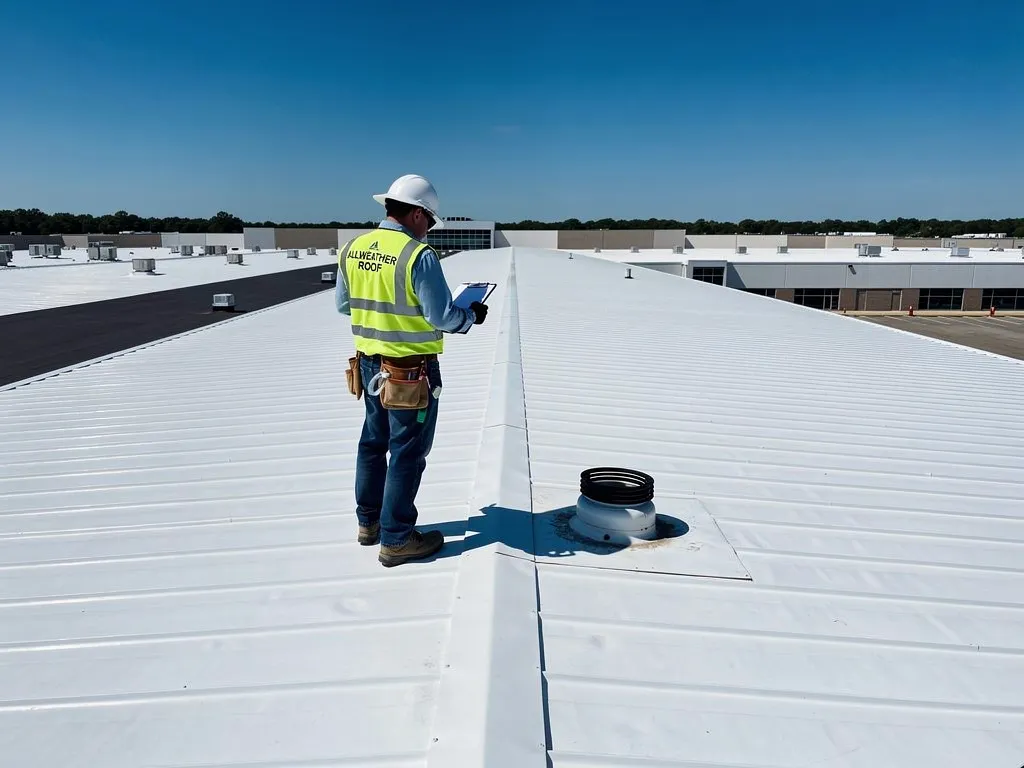
Preventative maintenance combines regular inspections, annual service plans and protective roof coatings to catch emerging issues early and extend roof life. A structured maintenance program saves repair costs, preserves warranties and minimises operational disruptions.
- Scheduled roof inspections identify minor membrane damage, drainage blockages and sealant failures before they become leaks.
- Annual maintenance plans include debris removal, drain cleaning, flashing resealing and documentation of roof condition.
- Reflective or elastomeric roof coatings restore UV resistance, seal minor cracks and enhance energy efficiency.
- Proactive maintenance reduces emergency repair frequency and lowers life-cycle costs by up to 30 percent.
Why Are Regular Commercial Roof Inspections Essential?
Regular inspections catch early signs of wear—such as seam separation, ponding or hail damage—preventing small issues from escalating. Certified technicians follow standardized checklists and document inspection findings, ensuring consistent coverage of all roof areas and timely scheduling of necessary repairs.
Passive Roof Leak Detection Systems for Membrane Roofs The U.S. Army possesses a substantial inventory of buildings featuring low-slope membrane roofs. Ultimately, the majority of these roofs will develop defects that permit water ingress. The expenditure associated with water damage to the roofing system, structural components, and building contents, which can occur between the onset of a leak and its subsequent detection and repair, can be exceedingly high. A passive roof leak detection system (PRLDS) could assist Army facility managers by enabling early leak identification and potentially reducing the Army’s roofing maintenance expenditure.Survey of passive leak detection technologies for membrane roofing, Unknown Author, 1994
What Do Annual Maintenance Plans Include?
Annual plans bundle services such as membrane cleaning, gutter and downspout clearing, flashings resealing, drain flow tests and maintenance reporting. This holistic approach keeps roofs in top condition, extends service life and maintains manufacturer warranty compliance.
How Do Roof Coatings Prevent Future Leaks?
Elastomeric or silicone-based roof coatings form a seamless barrier over existing membranes, filling micro-cracks and resisting UV degradation. Coatings enhance reflectivity, reduce roof temperatures and delay membrane replacement by up to five years, offering both protective and energy-saving benefits.
How Does Proactive Maintenance Save Repair Costs?
Proactive maintenance intercepts potential leak sources early, reducing the need for major repairs or full re-roofing. Studies show that investing in annual inspections and minor repairs can lower overall roof life-cycle costs by 20–30 percent compared to reactive approaches, improving return on investment.
Why Choose Allweather Roof as Your Commercial Roof Leak Repair Expert?
Allweather Roof combines nearly 100 years of roofing expertise with certified technicians, advanced technology and 24/7 emergency response to deliver unmatched reliability and transparency in leak repair services.
- Technicians hold certifications from leading manufacturers and follow industry standards for quality workmanship.
- Around-the-clock emergency crews respond to leaks within hours, minimising interior damage and business interruption.
- Client testimonials highlight fast response times, clean work sites and long-lasting repairs.
- Free commercial roof assessments provide detailed condition reports and transparent cost estimates before any work begins.
What Are the Frequently Asked Questions About Commercial Roof Leak Repair?
Building owners often ask about repair costs, inspection frequency, lease responsibilities, emergency response best practices and roof-type considerations. Below are clear, concise answers to common concerns.
How Much Does Commercial Roof Leak Repair Typically Cost?
Repair costs vary based on leak size, membrane type and required diagnostic methods, with patch-and-seal repairs ranging from £500 to £2 000 and full re-roofing projects starting around £25 per square metre. Factors such as access challenges, insulation saturation and local labour rates influence final pricing. Obtaining a free assessment ensures accurate, upfront estimates.
How Often Should Commercial Roofs Be Inspected for Leaks?
Commercial roofs should undergo professional inspections at least twice a year—preferably in spring and autumn—and after severe storms. Regular reviews catch emerging issues early and align with manufacturer warranty requirements, ensuring uninterrupted coverage.
Who Is Responsible for Roof Repairs in Commercial Leases?
Responsibility depends on lease terms: in a triple-net lease, tenants typically handle maintenance and repairs, while landlords cover structural replacements and capital improvements. Reviewing lease agreements and confirming roles during initial assessments prevents disputes and ensures timely action when leaks occur.
What Are the Best Practices for Emergency Roof Leak Response?
Best practices include securing the leak site with temporary sealants or tarps, protecting interior finishes with containment measures, notifying occupants of repair schedules and arranging permanent repairs as soon as possible. Documenting every step supports insurance claims and maintains a clear project record.
How Do Different Roof Types Affect Leak Repair Methods?
Flat single-ply roofs (EPDM, TPO) often require patch welding or adhesive repairs, while metal roofs need specialised caulks and seam tapes. Built-up and modified bitumen roofs use hot-mopped or torch-applied patches. Understanding material-specific characteristics ensures correct repair techniques and long-term performance.
Commercial roof leak repair involves a clear process of detection, cause analysis, targeted repair and ongoing maintenance. Partnering with an expert provider ensures building assets remain protected and performance expectations are met year after year. Contact Allweather Roof today to schedule your free commercial roof assessment and safeguard your facility against future leaks.