
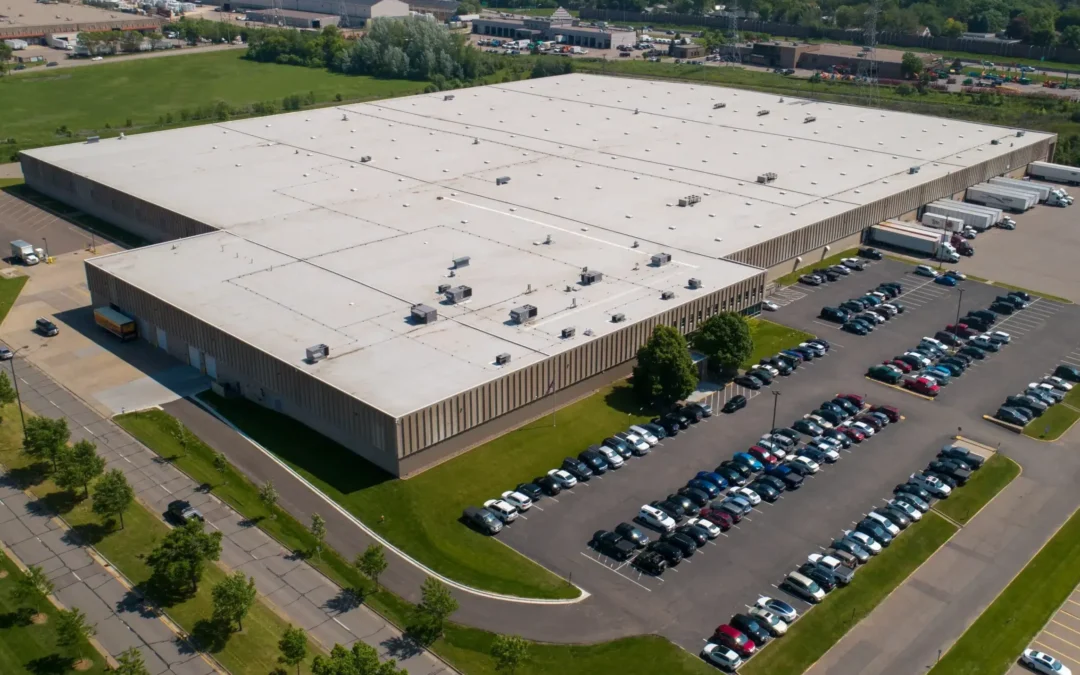
Comparing Drone vs. Traditional Roof Inspections for Commercial Properties
A commercial roofing system is one of the largest capital assets of any commercial building. Whether you manage a warehouse, office complex, retail center, manufacturing facility, healthcare campus, or multi-family property, protecting that investment starts with regular commercial roof inspections.
Routine inspections help identify small issues before they become expensive repairs, reduce the risk of business interruptions, extend the lifespan of your commercial roofing system, and support long-term capital planning.
Today, commercial property owners have two primary options for evaluating the condition of their roofs: traditional walk-on inspections and drone roof inspections. While both methods can provide valuable insights, advances in drone technology are changing how commercial roofing companies inspect buildings—making the process faster, safer, and more comprehensive.
So, which option is right for your commercial property?
In this guide, we’ll compare drone and traditional commercial roof inspections, explain the advantages of each, and help you determine which approach provides the greatest value for your facility.
Why Commercial Roof Inspections Are Essential
Minnesota’s climate presents unique challenges for commercial roofing systems.
Throughout the year, commercial roofs are exposed to:
- Heavy snow loads
- Freeze-thaw cycles
- Hailstorms
- High winds
- UV exposure
- Standing water
- Ice dams around rooftop equipment
- Temperature fluctuations
Over time, these conditions can damage roofing membranes, flashing, seams, drainage systems, and insulation.
Without regular inspections, minor issues often go unnoticed until they result in leaks, interior damage, costly repairs, or premature roof replacement.
Routine commercial roof inspections help building owners and facility managers:
- Extend the service life of their roofing system
- Detect damage before it worsens
- Protect manufacturer warranties
- Plan maintenance budgets
- Document roof conditions for insurance claims
- Minimize unexpected repair costs
- Improve long-term asset management
The sooner problems are identified, the more affordable they are to resolve.
What Is a Traditional Commercial Roof Inspection?
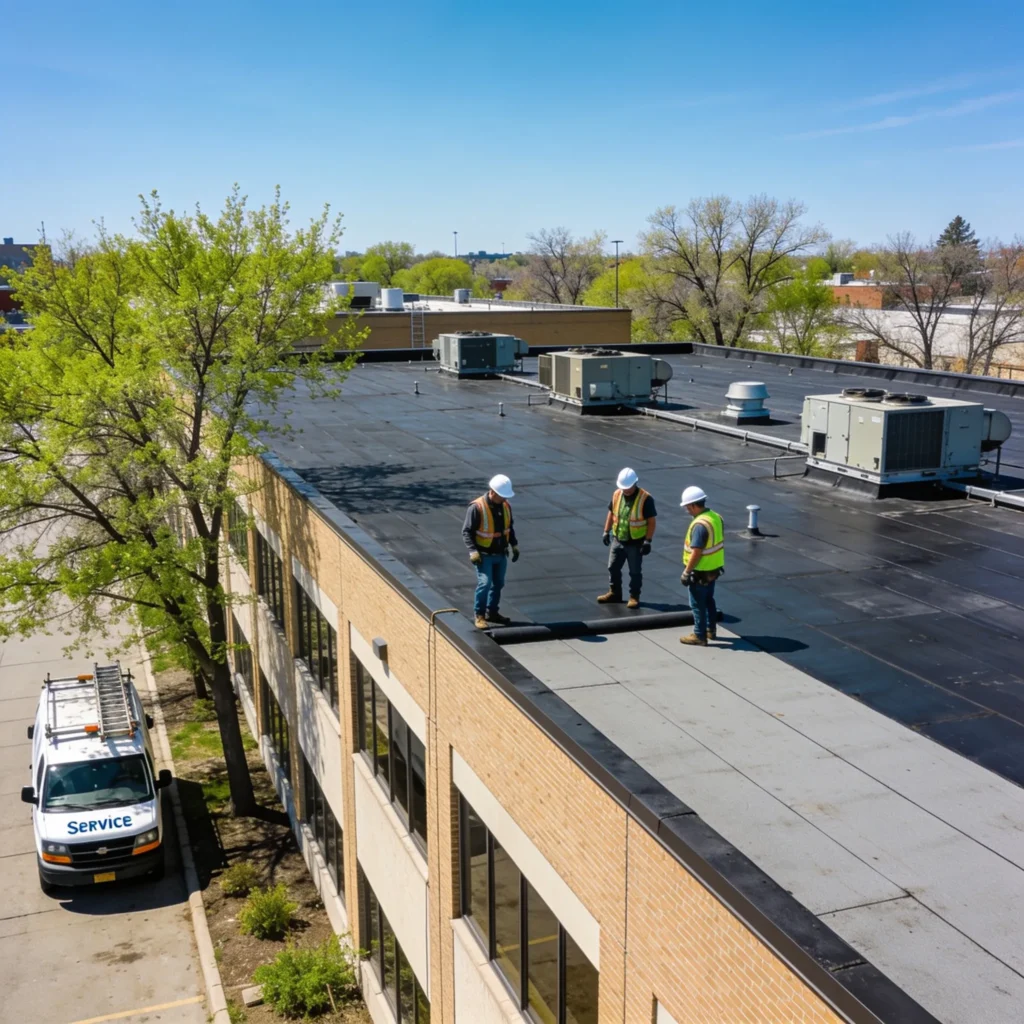
A traditional commercial roof inspection involves a commercial roofing specialist physically accessing the roof to evaluate its condition.
During the inspection, the roofing team typically examines:
- Roofing membranes
- Flashing systems
- Roof penetrations
- HVAC curbs and rooftop equipment
- Expansion joints
- Drainage systems
- Roof edges
- Coping caps
- Sealants
- Visible signs of storm damage
The inspector documents findings with photographs and prepares a report outlining current conditions and recommended repairs.
Traditional inspections remain an important part of commercial roof maintenance, particularly when hands-on evaluation is required.
What Is a Drone Roof Inspection?
A drone roof inspection uses FAA-certified drones equipped with high-resolution cameras—and, when needed, thermal imaging technology—to inspect commercial roofing systems without requiring technicians to walk every section of the roof.
The drone captures detailed aerial imagery of the roofing system from multiple angles, allowing commercial roofing specialists to evaluate the roof safely and efficiently.
Drone inspections can capture:
- High-resolution roof imagery
- Detailed close-up photographs
- Roof mapping
- Elevation views
- Roof measurements
- Video documentation
- Thermal imaging for moisture detection
- Storm damage documentation
All collected data is organized into a detailed inspection report that property owners and facility managers can use for maintenance planning, insurance documentation, and capital budgeting.
Drone vs. Traditional Commercial Roof Inspections
| Feature | Drone Inspection | Traditional Inspection |
|---|---|---|
| Worker Safety | Excellent | Moderate |
| Inspection Speed | Excellent | Moderate |
| Roof Access Required | Minimal | Required |
| High-Resolution Documentation | Excellent | Good |
| Large Commercial Roof Coverage | Excellent | Moderate |
| Roof Mapping | Yes | Limited |
| Thermal Imaging | Available | Limited |
| Risk of Surface Disturbance | Minimal | Higher |
| Hands-On Material Inspection | Limited | Excellent |
| Repeatable Documentation | Excellent | Moderate |
Rather than competing technologies, these inspection methods often complement one another.
Safety Is One of the Biggest Advantages of Drone Inspections
Commercial roofing inspections often involve accessing large flat roofs, navigating rooftop mechanical equipment, and working near elevated edges.
Traditional inspections may require technicians to:
- Access roof hatches
- Use fixed ladders
- Walk large roof surfaces
- Navigate around HVAC equipment
- Inspect multiple roof elevations
- Work near skylights and parapet edges
Drone inspections significantly reduce these safety risks by allowing much of the inspection to be completed from the ground.
For occupied commercial buildings, this also minimizes disruptions to tenants, employees, and day-to-day operations.
Faster Inspections for Large Commercial Buildings
Large commercial buildings often have thousands—or even hundreds of thousands—of square feet of roofing.
Walking every section of these roofs can require several hours.
Drone inspections dramatically reduce inspection time while capturing comprehensive documentation of the entire roofing system.
This makes drones particularly valuable for:
- Distribution centers
- Warehouses
- Manufacturing facilities
- Office campuses
- Shopping centers
- Schools
- Hospitals
- Municipal buildings
For organizations managing multiple facilities, faster inspections also make annual maintenance programs more efficient.
Better Documentation for Maintenance Planning
One of the greatest advantages of drone inspections is the quality of documentation they provide.
Instead of relying solely on photographs taken during a walk-on inspection, drones create a complete visual record of the commercial roofing system.
Benefits include:
- Full-roof aerial imagery
- High-resolution close-up photos
- Consistent documentation over time
- Easier comparison between inspections
- Better communication with ownership groups
- Improved maintenance records
- Clear evidence for insurance claims
This documentation supports more informed maintenance decisions and simplifies long-term capital planning.
Thermal Imaging Helps Identify Hidden Moisture
Not every roofing issue is visible from the surface.
Moisture can become trapped beneath commercial roofing membranes long before leaks appear inside the building.
When equipped with infrared technology, drone inspections can help identify:
- Wet insulation
- Hidden moisture intrusion
- Areas of trapped water
- Thermal inconsistencies
- Potential leak locations
Finding these issues early allows commercial roofing contractors to recommend targeted repairs before larger problems develop.
When Traditional Commercial Roof Inspections Are Still Necessary
Although drone technology offers significant advantages, traditional commercial roof inspections remain an important part of maintaining commercial roofing systems.
Certain situations require a physical inspection.
These include:
Core Sampling
Evaluating insulation conditions often requires removing samples from the roofing assembly.
Manufacturer Warranty Inspections
Some roofing manufacturers require physical inspections to maintain warranty compliance.
Material Testing
Commercial roofing specialists may need to manually evaluate membrane seams, flashing, fasteners, or other roofing components.
Repair Verification
Following major repairs or restoration work, technicians often perform walk-on inspections to verify workmanship and completed repairs.
The Best Commercial Roof Inspection Often Uses Both Methods
Rather than choosing one inspection method over the other, many commercial roofing companies combine drone technology with traditional inspection techniques.
A comprehensive commercial roof inspection may include:
- Drone imaging of the entire commercial roofing system
- Identification of potential problem areas
- Targeted walk-on inspection where needed
- Thermal imaging when moisture is suspected
- A detailed inspection report with photographs and recommendations
This hybrid approach provides the most complete understanding of your roof’s condition while reducing unnecessary safety risks.
Drone Roof Inspections After Severe Minnesota Weather
Minnesota’s weather can change rapidly, and severe storms often leave commercial properties with damage that isn’t immediately visible from the ground.
After hail, high winds, or heavy snowfall, drone inspections allow commercial roofing contractors to quickly evaluate roofing conditions.
Benefits include:
- Rapid storm damage assessments
- High-resolution documentation for insurance claims
- Faster repair planning
- Identification of damage across large commercial roofs
- Reduced disruption to facility operations
For property management companies overseeing multiple buildings, this speed can be invaluable during severe weather events.
What to Expect During a Commercial Drone Roof Inspection
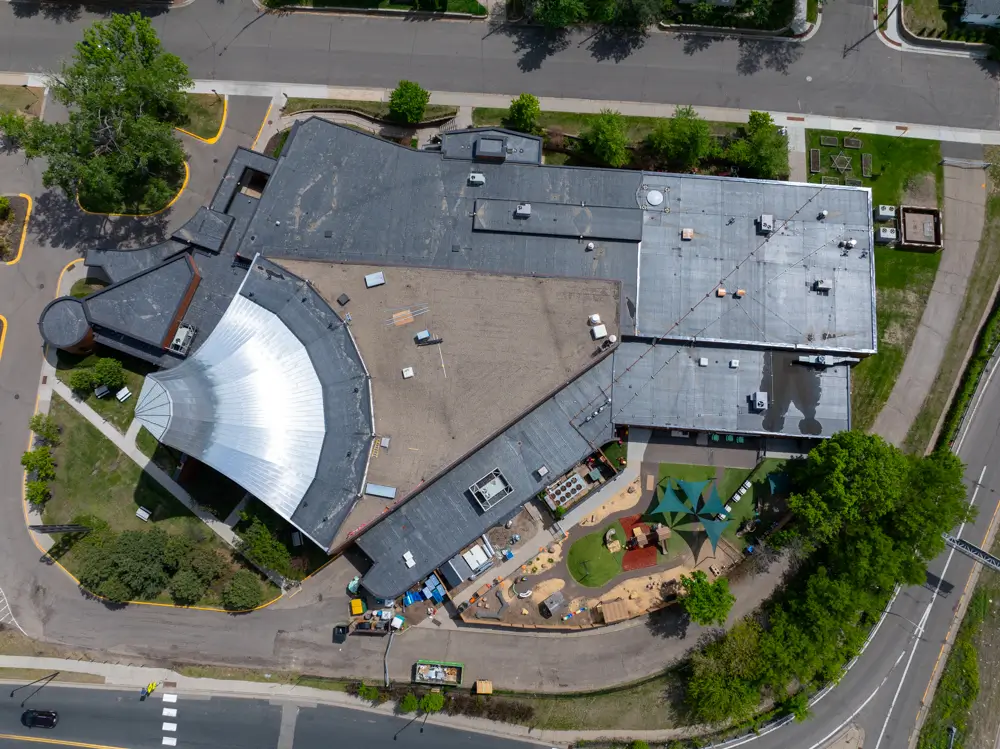
A professional commercial drone inspection typically includes:
- FAA-compliant drone operation
- High-resolution aerial photography
- Roof condition assessment
- Identification of visible damage
- Roof measurements and mapping
- Thermal imaging when appropriate
- A written inspection report
- Repair and maintenance recommendations
- Digital documentation for future reference
The result is a comprehensive overview of your commercial roofing system that supports proactive maintenance and informed decision-making.
Which Commercial Roof Inspection Is Right for Your Property?
A drone commercial roof inspection may be the best choice if you need:
- Fast inspections across large facilities
- Comprehensive roof documentation
- Storm damage assessments
- Annual maintenance inspections
- Insurance claim support
- Safer inspections with minimal roof access
A traditional commercial roof inspection may be appropriate when you need:
- Hands-on material testing
- Core sampling
- Warranty compliance inspections
- Verification of completed repairs
- Physical evaluation of identified problem areas
For many commercial properties, combining both inspection methods provides the most accurate and complete assessment.
Invest in Proactive Commercial Roof Maintenance
Routine commercial roof inspections are one of the most effective ways to protect your building, control maintenance costs, and extend the lifespan of your commercial roofing system.
Whether you manage a single commercial facility or an entire portfolio of properties, identifying roofing issues early helps prevent costly repairs, supports long-term capital planning, and protects your investment.
Modern drone technology, combined with the expertise of an experienced commercial roofing contractor, provides safer inspections, detailed documentation, and valuable insights that help property owners make informed maintenance decisions.
If you’re responsible for maintaining a commercial facility, managing multiple properties, or planning your annual roof maintenance budget, scheduling a professional commercial roof inspection can help identify issues before they become costly repairs.