Commercial Roof Inspection Before Fall: What Minnesota Building Owners Should Check Now
Late Summer Is the Time to Find Commercial Roof Problems Before Minnesota Winter Does
For Minnesota commercial property owners, late August is more than the end of summer. It is a critical window for getting your building ready for the weather ahead.
Your commercial roof has already been exposed to months of rain, thunderstorms, hail, high winds, intense sunlight, rooftop traffic, and temperature changes. Now, fall is approaching—and with it comes another round of storms, colder temperatures, freezing conditions, and eventually snow and ice.
That makes late summer and early fall one of the most important times to schedule a commercial roof inspection in Minnesota.
The goal isn’t simply to find an active leak.
A professional inspection can uncover small problems that may not be visible from the ground but could become much more expensive once freezing temperatures arrive. Loose flashing, damaged seams, clogged drains, deteriorating sealants, membrane damage, and storm-related issues can all become bigger problems when water begins freezing and expanding.
Taking care of those issues now can help Minnesota building owners avoid emergency repairs, unexpected disruptions, and premature roof replacement.
Why Late August Is an Important Time for Commercial Roof Maintenance
Minnesota’s weather can be hard on commercial roofing systems throughout the year.
By the end of August, your roof has already made it through the first half of the year and most of the summer storm season. That means late summer provides a valuable opportunity to assess its current condition before the demands of fall and winter begin.
Fall is also when many commercial property owners start thinking seriously about winter preparation. Waiting until the first snowfall, however, can leave you with fewer options for addressing problems.
A late-summer commercial roof inspection gives you time to:
- Identify storm and hail damage.
- Repair damaged roofing membranes.
- Check flashing and roof penetrations.
- Clear drainage systems.
- Address ponding water.
- Inspect seams and perimeter details.
- Identify areas of moisture intrusion.
- Plan larger repairs or replacement projects.
- Prepare the roof for snow and freezing temperatures.
Minnesota roofing professionals commonly recommend seasonal inspections because spring and fall provide important opportunities to identify damage before the next extreme-weather cycle.
What Should a Commercial Roof Inspection Include?
A commercial roof inspection should go beyond simply looking for obvious leaks.
Your roofing system is made up of multiple components that work together to keep water outside the building. Damage to one small area can eventually affect insulation, decking, interior spaces, equipment, and business operations.
A professional commercial roof inspection in Minnesota should evaluate several key areas.
1. Inspect The Roof Membrane
The roofing membrane is your building’s primary defense against water intrusion.
Depending on the type of commercial roof you have, this could include TPO, EPDM, PVC, modified bitumen, or another low-slope roofing system.
Inspectors should look for:
- Punctures and tears
- Cracks
- Blisters
- Shrinkage
- Wrinkles
- Open seams
- Damaged areas
- Deteriorated surfaces
- Signs of previous repairs
Small membrane problems may not immediately result in an interior leak. However, leaving them unaddressed gives water an opportunity to enter the roofing assembly and cause additional damage.
2. Check Roof Seams And Flashing
Seams and flashing deserve special attention during a commercial roof inspection.
Flashing is used around roof edges, penetrations, walls, HVAC equipment, vents, skylights, and other transitions. These areas experience movement and temperature changes throughout the year.
Look for:
- Loose flashing
- Failed sealants
- Open seams
- Damaged termination points
- Cracked or deteriorated materials
- Gaps around penetrations
These details may seem minor, but they are often where water finds an opportunity to enter.
Addressing them before fall and winter can be significantly easier than trying to locate and repair a leak during freezing weather.
3. Clean And Inspect Roof Drains
Drainage is particularly important on commercial flat and low-slope roofs.
Heavy Minnesota summer storms can send large amounts of water onto a commercial roof in a short period of time. Leaves, branches, dirt, and other debris can obstruct drains and scuppers, preventing water from leaving the roof efficiently.
Your inspection should evaluate:
- Roof drains
- Scuppers
- Gutters
- Downspouts
- Drain strainers
- Debris accumulation
- Ponding water
Standing water should never simply be ignored.
If water repeatedly remains on the roof after rainfall, there may be an underlying drainage or slope issue that needs professional attention.
4. Look For Signs Of Storm Damage
Minnesota commercial roofs can experience significant exposure to summer thunderstorms, hail, wind, and heavy rainfall.
Not all storm damage immediately produces a leak.
Hail can damage roofing surfaces without creating an obvious opening. Strong winds can loosen flashing, edge metal, or roofing components. Flying debris can puncture membranes or damage rooftop equipment.
That is why a commercial roof inspection after severe weather can be valuable even when there are no visible leaks inside the building.
If your property has experienced a significant storm this summer, documenting the roof’s condition can also help you understand whether repairs are necessary before additional weather arrives.
5. Inspect Around Rooftop Equipment
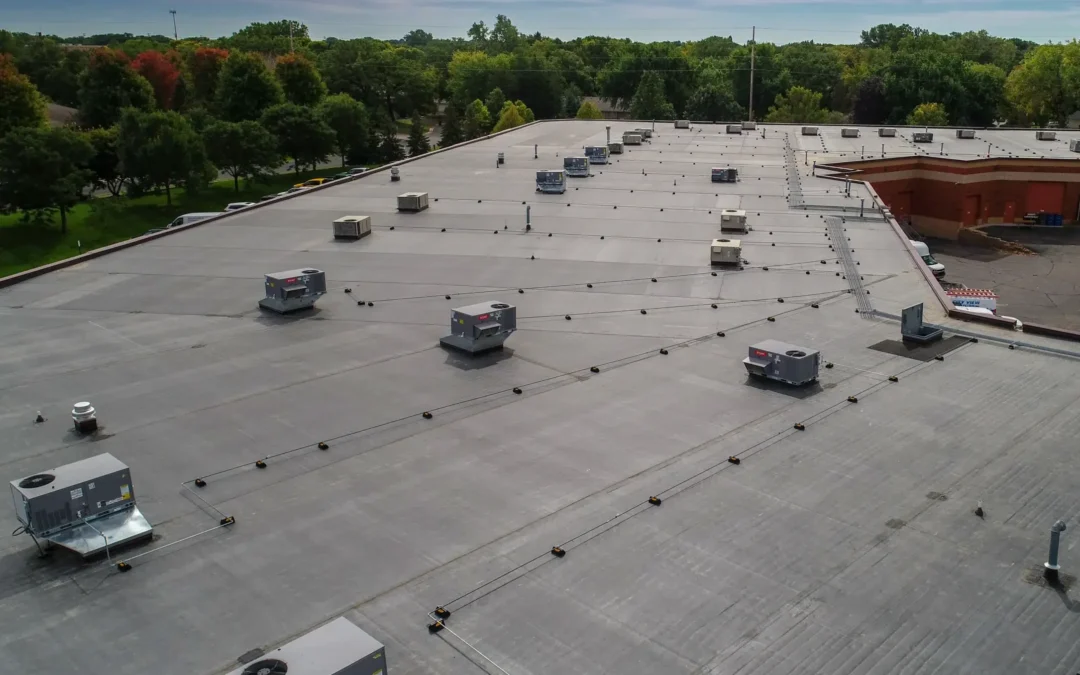
Commercial roofs often have HVAC units, exhaust fans, vents, electrical equipment, pipes, skylights, and other penetrations.
Every penetration represents another potential vulnerability in the roofing system.
Inspectors should pay particular attention to:
- HVAC curbs
- Mechanical equipment
- Pipe penetrations
- Exhaust fans
- Vents
- Skylights
- Electrical conduits
- Equipment supports
Rooftop service work can also create accidental damage. Contractors from other trades may need to walk across the roof or move equipment, potentially damaging membranes or flashing.
That is why rooftop equipment areas should be part of every thorough inspection.
6. Check For Ponding Water
Ponding water is one of the issues commercial building owners should take seriously.
A properly functioning commercial roof should direct water toward its drainage system. When water repeatedly collects in the same areas, it can place unnecessary stress on the roofing system and accelerate deterioration.
In Minnesota, the problem can become even more concerning as temperatures fall.
Water that remains on the roof can freeze, thaw, and refreeze as temperatures fluctuate. Those repeated cycles can put additional stress on roofing materials and vulnerable areas.
If you notice recurring ponding, don’t simply assume it will disappear on its own.
Have the area evaluated by a commercial roofing professional.
Don’t Ignore Small Commercial Roof Repairs
One of the biggest mistakes a commercial property owner can make is waiting for a leak before addressing roofing problems.
A roof doesn’t suddenly become damaged the moment water appears inside the building.
In many cases, deterioration happens gradually.
A small puncture can become larger. A loose flashing detail can deteriorate further. A minor seam issue can allow moisture into the roofing assembly. A clogged drain can turn heavy rainfall into standing water.
By the time water appears on an interior ceiling, the problem may have already progressed beyond the original point of failure.
That is why preventive commercial roof maintenance is so important.
The goal is to fix roofing problems while they are still manageable—not after they become an emergency.
Why Minnesota Winter Preparation Should Start Now
It may feel strange to think about snow when August temperatures are still warm, but commercial property owners should start thinking about winter roofing preparation before winter actually arrives.
Minnesota winters can bring:
- Heavy snow
- Ice accumulation
- Freezing temperatures
- Freeze-thaw cycles
- Wind-driven precipitation
- Rapid temperature changes
These conditions can place additional stress on an already compromised roofing system.
A roof with damaged flashing, deteriorating seams, drainage problems, or membrane damage going into winter may be much more likely to develop problems once temperatures drop.
Winter maintenance guidance for Minnesota commercial roofs also emphasizes inspecting drainage, flashing, sealants, and other vulnerable areas before severe winter conditions arrive.
Should You Repair Or Replace Your Commercial Roof?
A professional inspection can also help answer one of the biggest questions building owners face:
Does my commercial roof need repairs, or is it time for replacement?
The answer depends on several factors, including:
- The age of the roof
- The roofing system installed
- Overall membrane condition
- Number and severity of existing repairs
- Moisture within the roofing assembly
- Condition of flashing and seams
- Drainage performance
- Previous storm damage
- Remaining expected service life
A few isolated problems do not necessarily mean you need a complete roof replacement.
In many situations, targeted commercial roof repairs and proactive maintenance can keep an otherwise serviceable roofing system performing for years.
On the other hand, if a roof has widespread deterioration or repeated failures, continuing to repair individual areas may no longer be the most cost-effective long-term strategy.
A professional inspection can help you make that decision based on the actual condition of your roof rather than guessing.
Why Planning A Commercial Roof Project Before Winter Matters
If your inspection identifies a larger repair or replacement need, late summer and early fall give you an opportunity to plan ahead.
Waiting until the roof is actively leaking during winter can create a very different situation.
Emergency roofing problems can affect:
- Building occupants
- Inventory
- Manufacturing operations
- Office equipment
- Electrical systems
- Interior finishes
- Tenants
- Business continuity
Instead of reacting to a roofing emergency, property owners can use a late-summer inspection to develop a plan.
That could mean completing a repair immediately, scheduling a larger project, budgeting for replacement, or continuing with preventative maintenance while monitoring the roof.
The important thing is knowing what condition your roof is actually in.
A Simple Late-Summer Commercial Roof Checklist
Before fall arrives, Minnesota commercial property owners should consider having the following areas evaluated:
Roof Membrane
Check for punctures, cracks, wrinkles, blisters, deterioration, and other visible damage.
Seams
Look for open, separated, or deteriorating seams.
Flashing
Inspect flashing around walls, edges, HVAC equipment, vents, and other penetrations.
Drainage
Make sure drains, scuppers, gutters, and downspouts are clear and functioning properly.
Ponding Water
Identify areas where water consistently remains after rainfall.
Rooftop Equipment
Inspect areas surrounding HVAC units, vents, pipes, skylights, and other equipment.
Storm Damage
Look for evidence of hail, wind, debris, or other summer storm damage.
Interior Areas
Check ceilings, walls, insulation, and interior spaces for signs of moisture intrusion.
Previous Repairs
Review older repair areas to make sure they remain intact.
Winter Preparation
Address vulnerabilities before freezing temperatures, snow, and ice arrive.
Don’t Wait For The First Snow To Inspect Your Commercial Roof
For Minnesota building owners, late August is a valuable opportunity.
Your roof has already experienced months of weather exposure, and the next major seasonal challenge is approaching.
A professional commercial roof inspection in Minnesota can help identify problems before they turn into expensive emergency repairs. It can also give you a clearer understanding of your roof’s remaining service life and help you plan maintenance, repairs, or replacement before winter limits your options.
The best time to discover a roofing problem is when you still have time to do something about it.
If you own or manage a commercial property in Minnesota and haven’t had your roof professionally evaluated recently, now is an excellent time to schedule an inspection.
Protect Your Commercial Property Before Minnesota Winter Arrives
Your commercial roof protects everything underneath it—from employees and tenants to inventory, equipment, and daily business operations.
Don’t wait until a leak appears during a freezing Minnesota winter to find out your roof needed attention months earlier.
Allweather Roof provides commercial roofing services throughout Minnesota, including commercial roof inspections, maintenance, repairs, and roofing solutions for businesses and commercial properties.
Whether your roof needs a minor repair or you’re beginning to plan for a larger roofing project, a professional evaluation can help you understand your options and make an informed decision.
Schedule a commercial roof inspection with Allweather Roof before fall weather arrives.