
Commercial Skylights in Minneapolis: What Building Owners Need to Know
Natural light can make a noticeable difference inside a commercial building. For warehouses, manufacturing facilities, retail spaces, schools, and other large properties, skylights can bring daylight into areas that would otherwise rely heavily on artificial lighting.
But commercial skylights are also part of the building’s roofing system. When they become damaged, aged, or improperly sealed, they can contribute to leaks, heat loss, and other roofing problems.
For Minnesota commercial property owners, understanding how skylights work, how to maintain them, and when they may need to be repaired or replaced can help protect the building while making better use of natural light.
What Are Commercial Skylights?
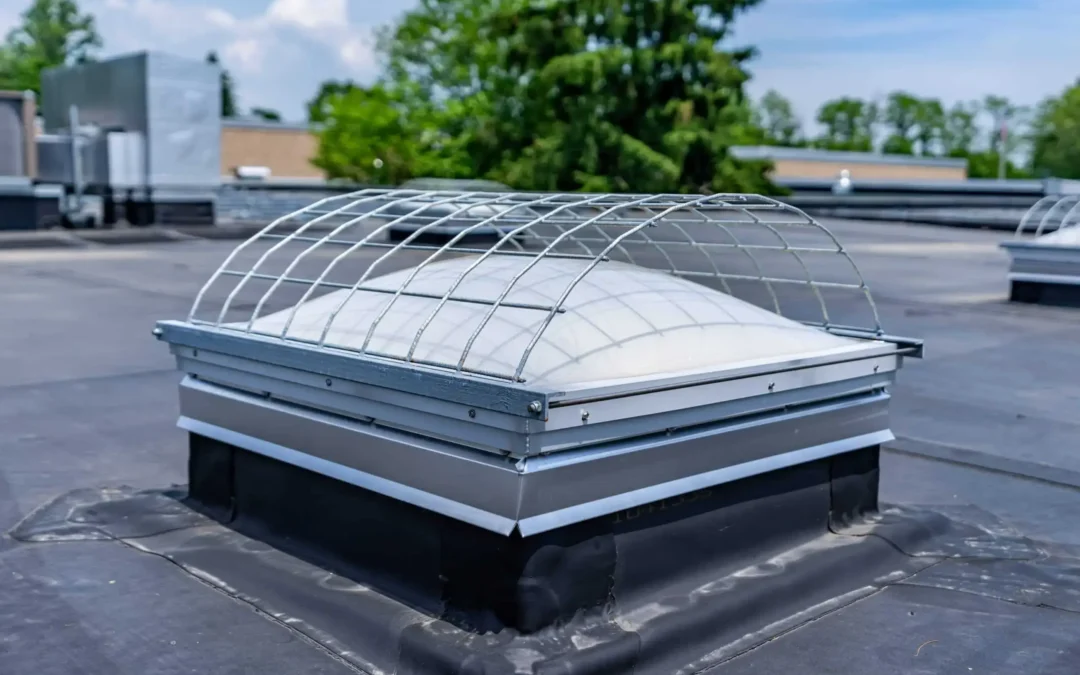
Commercial skylights are roof-mounted systems designed to bring natural daylight into interior spaces.
Unlike residential skylights, commercial skylights are often installed across large low-slope or flat roofing systems. They may be found on warehouses, factories, distribution centers, retail buildings, schools, and other large commercial properties.
Commercial skylights can serve several purposes, including:
- Bringing natural daylight into large interior spaces
- Reducing reliance on electric lighting during daylight hours
- Improving visibility in areas without traditional windows
- Making large workspaces feel brighter and more comfortable
- Supporting the overall design and function of a commercial building
Because skylights are integrated into the roof, their condition should be considered as part of the building’s overall roofing system.
Why Do Commercial Buildings Use Skylights?
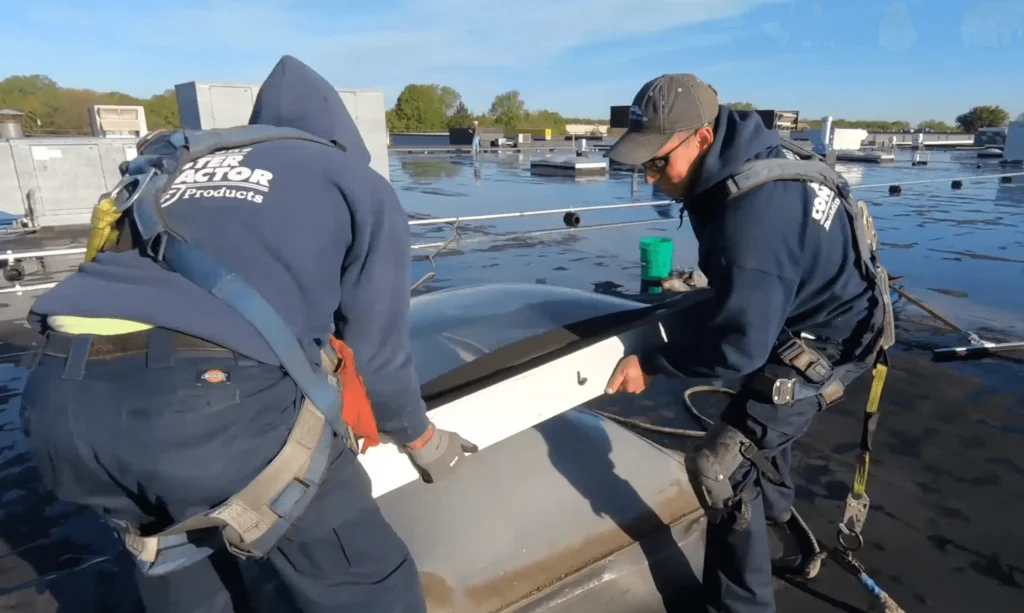
Large commercial buildings often have expansive roof areas and limited opportunities for traditional windows.
Skylights provide another way to bring daylight into the building without sacrificing valuable wall space.
For warehouses and industrial facilities in particular, natural daylight can help illuminate large areas of the building during the day.
Depending on the building, skylights may be especially useful in:
- Warehouses
- Manufacturing facilities
- Distribution centers
- Retail buildings
- Schools and educational facilities
- Office and commercial buildings
- Large open interior spaces
The benefits will vary depending on the building’s design, skylight placement, glazing, roof system, and how the space is used.
Can Skylights Help Reduce Energy Use?
One of the biggest potential benefits of commercial skylights is the ability to use natural daylight instead of relying entirely on electric lighting during daylight hours.
When a building receives sufficient natural light, its occupants may not need as much artificial lighting during the day. This can potentially reduce lighting-related energy consumption.
However, skylights should be properly designed and installed for the building. Too much solar heat gain, poor insulation, damaged glazing, or air leakage can create other energy concerns.
That’s why skylights should be considered as part of the entire roofing and building system rather than as a standalone feature.
How Does Minnesota Weather Affect Commercial Skylights?
Minnesota’s weather can be tough on commercial roofing systems, and skylights are no exception.
Commercial skylights can be exposed to:
- Heavy snow
- Ice accumulation
- Freeze-thaw cycles
- Strong winds
- Hail
- Rain
- Summer heat
- UV exposure
Over time, these conditions can contribute to deterioration of skylight components, seals, flashing, and surrounding roofing materials.
Freeze-thaw cycles are particularly important in Minnesota. Water can enter small gaps or compromised areas, freeze and expand, and contribute to deterioration over time.
Regular inspections can help identify developing problems before they become larger roofing issues.
What Are the Signs a Commercial Skylight Needs Attention?
Skylight problems aren’t always obvious from inside the building.
Building owners and facility managers should watch for signs such as:
Water Leaks
Water stains, dripping water, or damp areas around a skylight may indicate a problem with the skylight itself, its flashing, or the surrounding roof system.
Cracked or Damaged Glazing
Visible cracks, breaks, discoloration, or other damage can indicate that a skylight needs professional evaluation.
Deteriorated Seals
Aging seals and other components can allow water or air to enter the building.
Damaged Flashing
Flashing helps create a weather-resistant transition between the skylight and the roof. Damaged or deteriorated flashing can create opportunities for leaks.
Drafts or Temperature Changes
Noticeable drafts or unusual temperature differences around a skylight may indicate problems with sealing or insulation.
Cloudiness or Discoloration
Changes in the appearance of skylight glazing can affect the amount of daylight entering the building and may indicate aging materials.
If you notice any of these signs, it’s worth having the skylight and surrounding roof evaluated rather than assuming the problem will resolve itself.
Should You Repair or Replace a Commercial Skylight?
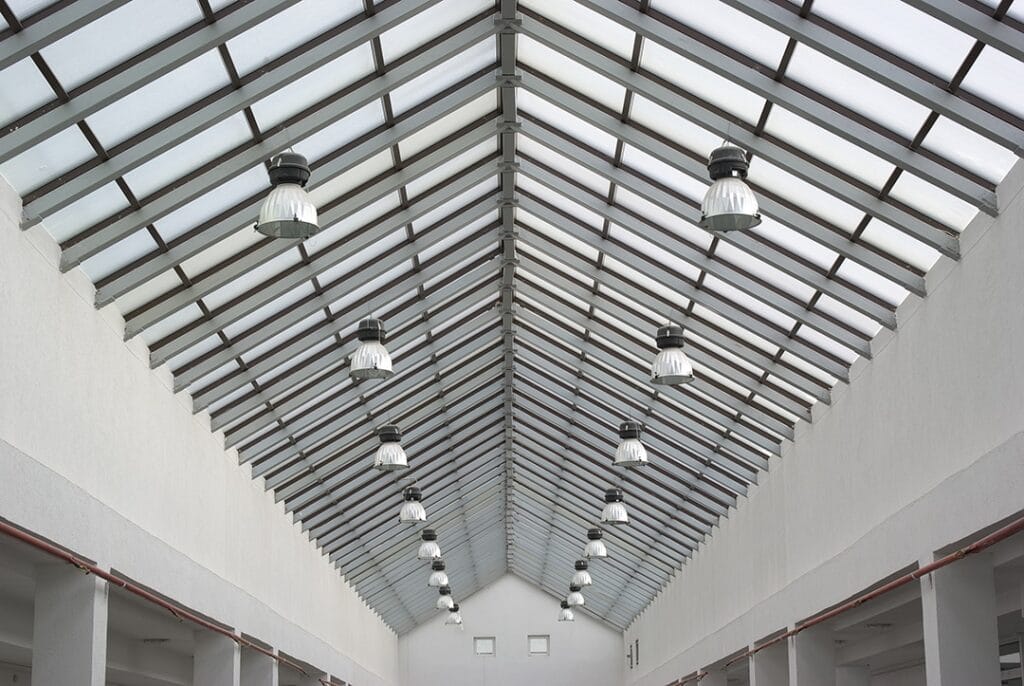
Roof of industry factory, and lamps. Interior design.
Not every skylight problem requires complete replacement.
Minor issues with flashing, seals, or surrounding roofing materials may be repairable. In other cases, an older skylight may have deteriorated to the point where replacement makes more sense.
The right solution depends on factors such as:
- The age of the skylight
- The condition of the glazing
- The condition of the surrounding roof
- The extent of any leaks
- The condition of flashing and seals
- The skylight’s overall performance
- The expected remaining life of the roof
A professional inspection can help determine whether repair or replacement is appropriate.
Why Should Skylights Be Part of Your Commercial Roof Inspection?
A commercial roof inspection shouldn’t focus only on the roofing membrane.
Skylights, flashing, drains, penetrations, seams, and other roof components can all affect the performance of the overall system.
Including skylights in regular roof inspections allows potential problems to be identified earlier.
For commercial property owners, this can help with:
- Identifying leaks before they cause more interior damage
- Planning maintenance
- Extending the useful life of roofing components
- Avoiding unexpected repairs
- Maintaining the building’s energy performance
- Planning future roof and skylight replacement
Allweather Roof provides commercial roofing inspections, maintenance, repairs, and re-roofing services for Minnesota businesses.
Why Professional Commercial Skylight Installation Matters
Installing a skylight isn’t simply a matter of creating an opening in the roof and placing a window inside it.
The skylight has to work with the existing roofing system. Proper flashing, sealing, drainage, and installation details are important for preventing water intrusion and maintaining the roof’s performance.
An experienced commercial roofing contractor can evaluate the existing roofing system and determine how a skylight installation, repair, or replacement should integrate with it.
This is especially important for large commercial properties where a roofing problem can affect equipment, inventory, employees, and daily operations.
Commercial Skylights and Roofing: Think About the Whole System
A skylight can provide valuable natural light, but it is also a component of the building’s roof.
That means skylight performance depends on more than the skylight itself. The surrounding membrane, flashing, insulation, drainage, and other roofing components all play a role.
For Minnesota commercial property owners, regular inspections and preventative maintenance can help keep both the roof and skylights performing as they should.
Whether you’re considering adding skylights, dealing with a leak, or evaluating aging skylights on an existing commercial building, a professional assessment can help you understand your options.
Commercial Skylight Services in Minnesota
Allweather Roof has served Minnesota property owners since 1925, providing commercial roofing services including inspections, maintenance, repairs, and re-roofing.
If your commercial building has skylights that are leaking, damaged, aging, or no longer performing as expected, Allweather Roof can evaluate the skylights as part of your overall roofing system.
Contact Allweather Roof to schedule a commercial roof assessment and discuss your skylight needs.