
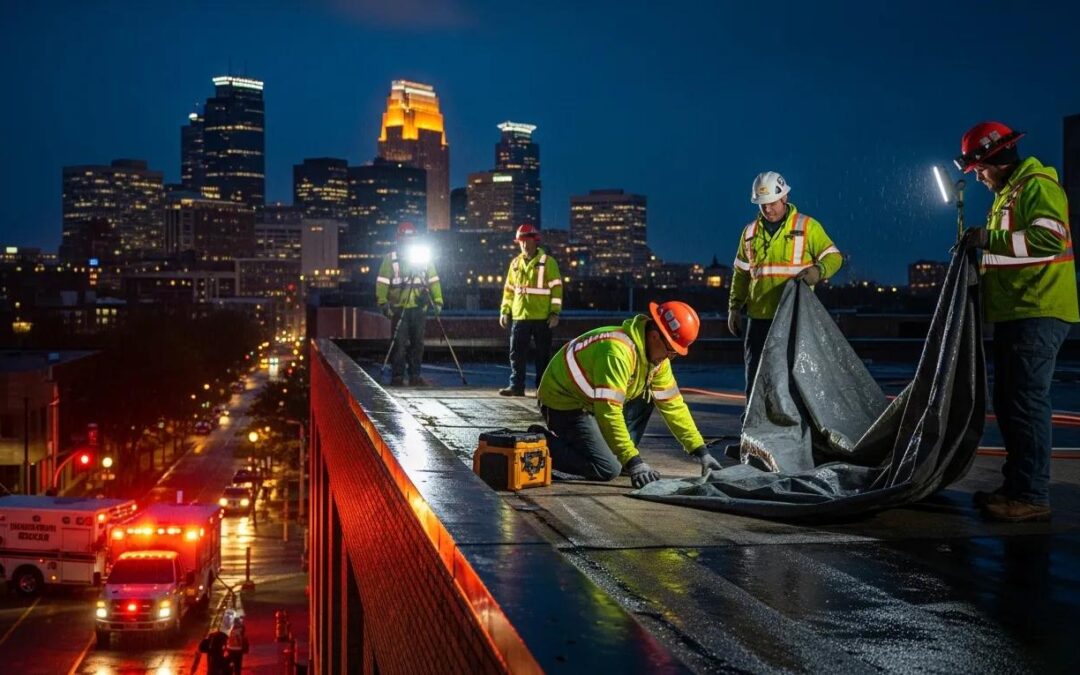
Fall Commercial Roof Inspection Checklist for Minnesota: 10 Things to Check Before Winter
Prepare Your Commercial Roof Before Minnesota’s Snow, Ice, And Freeze-Thaw Cycles Arrive
Fall is one of the most important times of year for commercial building owners and property managers to inspect their roofing systems.
Before Minnesota temperatures drop, snow begins to accumulate, and repeated freeze-thaw cycles put additional stress on a commercial roof, it is important to identify and address small roofing problems while they are still manageable.
A minor membrane puncture, clogged roof drain, damaged flashing, or open seam may not seem urgent in September. However, once temperatures fall and moisture begins freezing and expanding, existing roofing problems can become more difficult and expensive to address.
For commercial buildings in Minneapolis, St. Paul, Golden Valley, Austin, and communities throughout Minnesota, a professional fall commercial roof inspection can help identify potential problems before winter weather arrives.
Use this commercial roof inspection checklist to understand what should be evaluated before the first major snow and ice events of the season.
Why Fall Is An Important Time For A Commercial Roof Inspection
Minnesota commercial roofs experience significant weather exposure throughout the year.
During spring and summer, roofing systems may be exposed to severe thunderstorms, hail, high winds, heavy rainfall, intense sunlight, rooftop traffic, and equipment maintenance.
By September and October, those conditions make a fall inspection especially valuable.
The goal is not simply to look for an active roof leak. A professional commercial roof inspection should evaluate the entire roofing system and identify conditions that could create problems during the winter.
Winter preparation is particularly important for commercial flat roofs and low-slope roofing systems because drainage, membrane condition, flashing, penetrations, and areas where water can collect all play an important role in long-term roof performance.
A proactive inspection gives building owners an opportunity to address problems before they become emergency commercial roof repairs.
1. Inspect The Roof Membrane
The roofing membrane is one of the most important components of a commercial flat roof.
Depending on the building, the roofing system may use TPO, EPDM, PVC, built-up roofing, modified bitumen, or another commercial roofing assembly.
During a fall inspection, the membrane should be checked for signs of:
- Punctures
- Tears
- Cracks
- Blisters
- Wrinkling
- Surface deterioration
- Loose areas
- Mechanical damage
- Signs of water intrusion
TPO roofing systems, for example, are designed to provide durable weather protection, but they can still experience punctures, seam separation, flashing problems, ponding water, and storm-related damage.
Problems that are relatively straightforward to repair during favorable fall weather can become more complicated once winter conditions arrive.
2. Check Commercial Roof Seams
Roof seams deserve special attention during a commercial roof inspection.
Single-ply roofing systems such as TPO and other membrane systems rely on properly sealed seams to create a watertight roofing assembly.
An inspection should look for:
- Open seams
- Separation
- Damaged welds
- Shrinking membrane
- Loose membrane sections
- Areas where previous repairs may be failing
A small seam problem does not necessarily mean the entire roof needs to be replaced.
In many situations, a qualified commercial roofing contractor can repair localized membrane or seam damage and help prevent water from entering the roofing system.
Addressing these issues before winter can help reduce the possibility of leaks when snow melts and refreezes.
3. Clean And Inspect Roof Drains
Roof drainage should be one of the highest priorities on any fall commercial roof inspection checklist.
Leaves, branches, dirt, roofing debris, and other materials can accumulate around drains, scuppers, gutters, and downspouts.
If water cannot properly leave the roof, it may begin to pond.
As temperatures fall, standing water can freeze and create additional stress on the roofing system. Commercial winter guidance from the Insurance Institute for Business & Home Safety recommends maintaining roof drainage systems and removing debris that could prevent water from draining properly.
During a fall inspection, check:
- Internal roof drains
- Scuppers
- Gutters
- Downspouts
- Drain strainers
- Overflow drains
- Areas of standing water
- Debris accumulation
Proper drainage is especially important on commercial flat roofs because even small drainage problems can allow water to remain on the roof after rain or snowmelt.
4. Look For Ponding Water
Ponding water is another condition commercial property owners should take seriously.
Water that remains on a flat or low-slope commercial roof after rainfall can indicate drainage problems, insufficient slope, blocked drains, or other roofing conditions.
Over time, repeated ponding may contribute to membrane deterioration and increase the risk of leaks.
A professional commercial roof inspection should document areas where water consistently collects.
If ponding is present, the solution may involve something as simple as correcting a drainage obstruction, or it may require a more detailed evaluation of the roof assembly and drainage design.
The important thing is to identify the problem before winter weather makes the situation more difficult.
5. Inspect Flashing And Roof Penetrations
Many commercial roof leaks begin around areas where the roofing membrane meets another building component.
Common roof penetrations include:
- HVAC equipment
- Exhaust fans
- Pipes
- Vents
- Skylights
- Electrical conduits
- Mechanical equipment
- Roof curbs
Flashing and sealants around these areas should be carefully inspected for deterioration, movement, gaps, or damage.
Minnesota’s seasonal temperature changes can put additional stress on roofing details because building materials expand and contract as temperatures change.
A fall commercial roof inspection provides an opportunity to identify deteriorated flashing before winter moisture finds its way into the building.
6. Check For Storm And Hail Damage
Minnesota commercial roofs can experience significant weather exposure during spring and summer.
Even when a storm does not immediately cause an interior leak, hail, wind, and flying debris can damage roofing membranes, flashing, edge details, and rooftop equipment.
Look for:
- Hail impacts
- Punctures
- Loose flashing
- Damaged edge metal
- Displaced materials
- Membrane damage
- Damaged rooftop equipment
- Evidence of previous emergency repairs
Storm damage can sometimes be difficult to identify from ground level.
If your commercial building experienced severe weather during the year, a professional commercial roof inspection can help determine whether repairs are necessary before winter.
7. Inspect Roof Edges And Perimeter Details
Roof edges are another important part of winter roof preparation.
During an inspection, commercial roofing professionals should examine perimeter details, edge metal, flashing, and areas where the roofing membrane terminates.
These components help protect the roofing assembly from wind and water intrusion.
Damage or loose components should be addressed before winter because snow, ice, wind, and repeated temperature changes can place additional stress on vulnerable areas.
A small perimeter problem may become a larger roofing issue if it is left untreated.
8. Check Rooftop Equipment And Maintenance Areas
Commercial roofs frequently have HVAC units, mechanical equipment, pipes, vents, and other systems installed on or around the roof.
Maintenance personnel may also regularly access these areas.
Repeated foot traffic and equipment servicing can increase the possibility of accidental membrane damage.
Before winter, inspect areas around:
- HVAC units
- Service walkways
- Equipment supports
- Mechanical curbs
- Rooftop access points
- Exhaust systems
- Pipe penetrations
Make sure equipment servicing has not damaged the roofing membrane or flashing.
It is also important to verify that rooftop equipment and maintenance practices are not creating drainage obstructions or contributing to standing water.
9. Review Previous Roof Repairs
If your commercial roof has been repaired during the past year, fall is a good time to evaluate those repair areas again.
A repair that performed well during summer may still need to be monitored for signs of deterioration.
Review:
- Previous leak locations
- Membrane patches
- Seam repairs
- Flashing repairs
- Drainage corrections
- Areas with recurring leaks
- Temporary repairs
If the same location has required multiple repairs, it may be worth having a commercial roofing contractor determine whether there is a larger underlying problem.
Repeated repairs can sometimes indicate that a section of the roofing system requires more extensive restoration or replacement.
10. Determine Whether Your Roof Needs Repair, Maintenance, Or Replacement
A fall commercial roof inspection should not automatically result in a recommendation for a complete roof replacement.
Instead, the condition of the existing roof should be evaluated to determine the most appropriate next step.
Depending on what the inspection finds, your options may include:
Preventive Maintenance
If the roof is generally in good condition, routine maintenance and minor repairs may help extend its service life.
Commercial Roof Repair
Localized leaks, damaged flashing, punctures, seam problems, and other isolated issues may be repairable.
Roof Restoration
If the roofing system has widespread wear but remains a candidate for restoration, a restoration strategy may help extend the useful life of the existing system.
Commercial Roof Replacement
If the roof has extensive deterioration, widespread moisture problems, repeated failures, or is approaching the end of its service life, replacement may need to be considered.
The right solution depends on the condition of the individual roofing system, its age, previous repair history, drainage, insulation, building use, and other factors.
What About TPO Roofs Before Minnesota Winter?
TPO roofing is commonly used on commercial buildings throughout Minnesota, including warehouses, offices, retail properties, industrial buildings, and other low-slope structures.
Before winter, TPO roof inspections should pay particular attention to:
- Membrane punctures
- Heat-welded seams
- Flashing
- Roof penetrations
- Ponding water
- Drainage
- Edge details
- Areas of heavy rooftop traffic
- Previous repairs
Allweather Roof provides commercial TPO roofing installation, repair, replacement, inspections, and maintenance services throughout Minneapolis and surrounding Minnesota communities.
Regular inspection and maintenance can help identify problems before they develop into larger roofing failures.
What Happens If You Wait Until Winter To Address Roof Problems?
Waiting until a commercial roof is actively leaking can make a roofing problem more disruptive.
Once Minnesota experiences freezing temperatures, snow, and ice, roofing work can become more challenging depending on weather conditions and the type of repair required.
More importantly, water that enters through a roofing defect can potentially affect materials beneath the membrane, including insulation and decking.
It can also create interior problems involving ceilings, walls, equipment, inventory, and occupied spaces.
The Insurance Institute for Business & Home Safety recommends maintaining commercial roof drainage systems during winter and removing debris that could interfere with drainage. Its commercial winter guidance also emphasizes managing snow, ice, and water conditions that can contribute to roof problems.
Taking care of known roofing problems before winter gives building owners more control over when and how repairs are completed.
A Simple Fall Commercial Roof Maintenance Checklist
Before winter arrives, Minnesota commercial property owners should consider having their roofing contractor evaluate:
- Roof membrane condition
- TPO or other single-ply seams
- Flashing
- Roof penetrations
- Roof drains
- Scuppers
- Gutters and downspouts
- Ponding water
- Roof edges
- Rooftop equipment
- Previous repairs
- Storm and hail damage
- Signs of moisture intrusion
- Overall roof condition
- Remaining service life
This checklist is useful for office buildings, warehouses, manufacturing facilities, retail centers, apartment buildings, hospitals, schools, churches, and other commercial properties.
Why Preventive Commercial Roof Maintenance Matters In Minnesota
Minnesota’s weather can be hard on commercial roofing systems.
Snow, ice, rain, wind, temperature fluctuations, and freeze-thaw cycles can expose weaknesses that may not be obvious during a visual inspection from the ground.
Regular inspections allow building owners and facility managers to identify problems earlier and plan repairs instead of waiting for an emergency.
Allweather Roof recommends regular commercial roof inspections and maintenance as part of a long-term approach to protecting commercial roofing systems. The company’s service information notes that inspection and maintenance can help increase the long-term life cycle of a roof assembly.
Prepare Your Commercial Roof Before Minnesota Winter Arrives
Late September and early fall are an excellent time to take a closer look at your commercial roofing system.
You do not need to wait for the first major snowfall or an interior leak to find out that your roof has a problem.
A professional fall commercial roof inspection can identify damaged membranes, failing seams, clogged drains, deteriorated flashing, ponding water, storm damage, and other conditions that may become more serious during winter.
If your commercial building is located in Minneapolis, St. Paul, Golden Valley, Austin, or elsewhere in Minnesota, Allweather Roof can evaluate your roofing system and help determine whether it needs maintenance, repair, restoration, or replacement.
Contact Allweather Roof to schedule a commercial roof inspection and prepare your building for Minnesota’s winter weather.
Frequently Asked Questions About Fall Commercial Roof Inspections
How Often Should A Commercial Roof Be Inspected In Minnesota?
Commercial roofs should be inspected regularly, with many property owners scheduling inspections at least annually and more frequently when the roof is older, has a history of problems, or has experienced severe weather. Allweather Roof recommends a minimum of one annual inspection for every roof system.
When Should I Schedule A Commercial Roof Inspection In Minnesota?
Fall is an important time to inspect a commercial roof because it provides an opportunity to identify and address problems before winter weather arrives. Spring inspections can also help identify damage following winter.
What Should A Commercial Roof Inspection Include?
A commercial roof inspection should evaluate the membrane, seams, flashing, roof penetrations, drainage systems, roof edges, rooftop equipment, signs of water intrusion, and other components that could affect roof performance.
How Do I Prepare A Flat Roof For Winter?
Start with a professional inspection, then address damaged membrane areas, open seams, flashing problems, drainage issues, ponding water, and other known deficiencies. Keeping drains and drainage systems clear is also an important part of winter preparation.
Does TPO Roofing Need Maintenance Before Winter?
Yes. TPO roofing systems still require regular inspection and maintenance. Before winter, inspect the membrane, seams, flashing, penetrations, drainage, and areas that may have experienced storm or mechanical damage.
Can A Commercial Roof Be Repaired Before Winter?
Many commercial roof repairs can be completed before winter, depending on the type of roofing system, the condition of the roof, the required materials, and weather conditions. Identifying problems early provides more opportunity to schedule appropriate repairs.
What Are The Signs That My Commercial Roof Needs Repair?
Common warning signs include recurring leaks, ponding water, damaged membrane, open seams, deteriorated flashing, damaged roof edges, interior water stains, and evidence of storm damage. A professional inspection can identify additional problems that may not be visible from inside the building.
Should I Repair Or Replace My Commercial Roof?
That depends on the roof’s age, condition, repair history, moisture levels, remaining service life, and the extent of the damage. A professional commercial roofing inspection can help determine whether maintenance, repair, restoration, or replacement is appropriate.
Protect Your Commercial Building Before Winter
A commercial roof is one of the most important components protecting your building, employees, tenants, equipment, inventory, and operations.
Before Minnesota winter arrives, take the opportunity to identify small problems before they become major ones.
Schedule a professional commercial roof inspection with Allweather Roof and make sure your roofing system is ready for the season ahead.